

Symptoms
Itchy vagina: causes, symptoms and solutions

Zineb Sadki
Editorial writing, Santelle
An itchy vagina is a common situation, but often a hard one to interpret.
Itching, burning, irritation or unusual discharge can appear alone or together, without it being obvious what is causing them.
Is it a yeast infection? An irritation? Should you worry or wait?
Understanding where these symptoms come from is essential for choosing the right care and avoiding unsuitable treatments.
Why does the vagina itch?
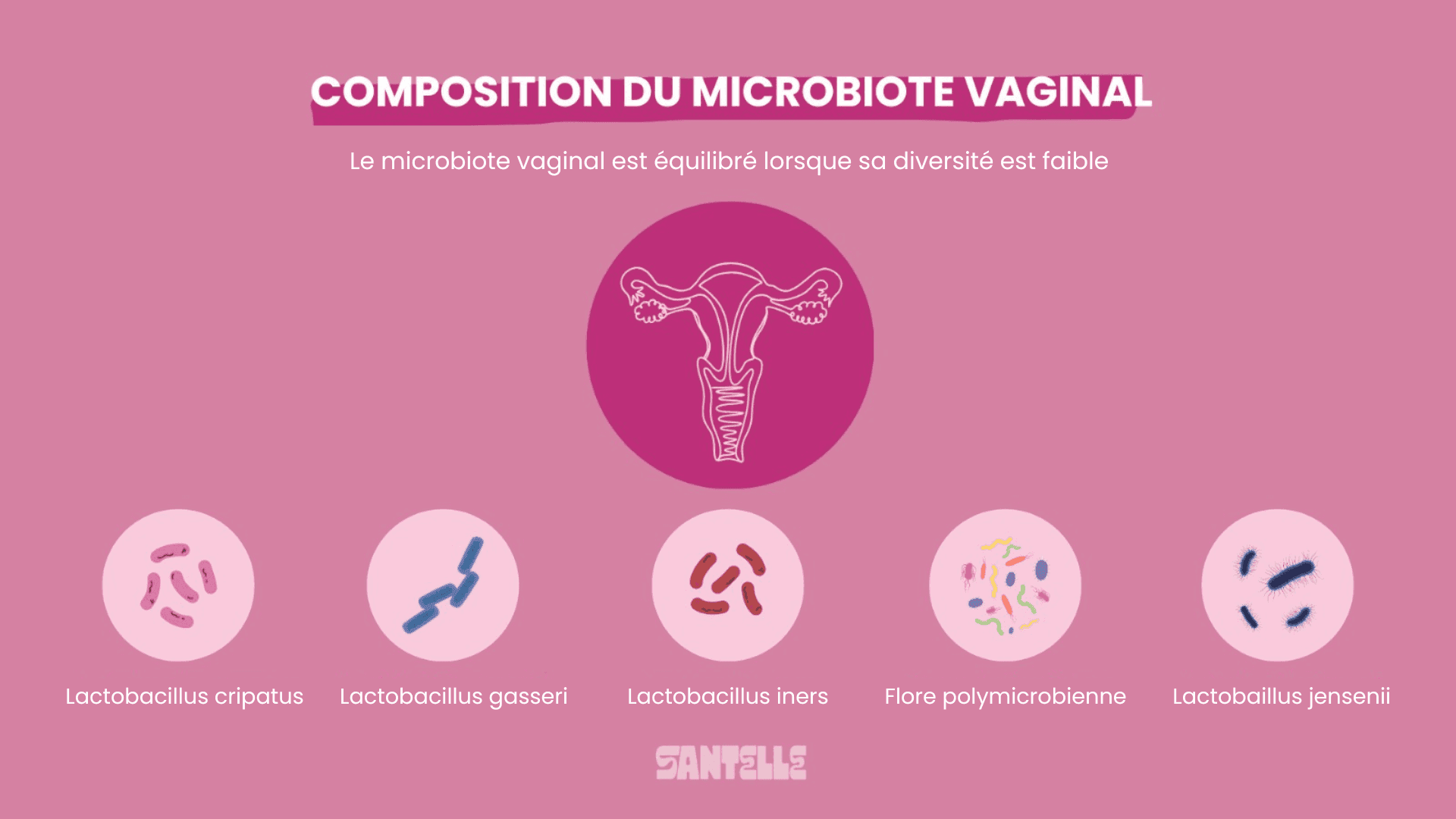
The vagina rests on a biological balance called the vaginal microbiome, made up mainly of lactobacilli.
Lactobacilli are “good bacteria” naturally present in the vagina, which protect the vaginal flora by producing lactic acid and preventing harmful microbes from developing.
These bacteria maintain an acidic vaginal pH, essential for limiting the growth of pathogens.
When that balance is disturbed, various symptoms can appear:
Vaginal itching
Burning of the vulva
An irritated, swollen vulva
Unusual vaginal discharge
In some cases these signs can be linked to unusual vaginal discharge, whose texture or odour can give important clues about where the problem comes from.
The causes of vaginal itching
An itchy vagina is a symptom, not a diagnosis. It generally reflects a change in the vaginal environment, but the origin can vary.
There are three main causes:
Vaginal irritation: linked to an external factor (friction, a product, a fabric)
Vaginal yeast infection: a fungal infection due to Candida
Vaginitis: inflammation often linked to a bacterial imbalance
Understanding the difference between common vaginal infections helps avoid frequent confusion, particularly between simple irritation and a more established infection.
How do you recognise vaginal irritation?
Vaginal irritation is generally linked to an external factor and shows up quickly after exposure.
The most common signs are:
Localised redness
A burning or tingling feeling
An irritated, swollen vulva
Moderate itching
It often appears after using products (soap, gel, laundry detergent) or after prolonged friction.
Unlike infections, it is rarely accompanied by characteristic vaginal discharge.
How do you recognise a vaginal yeast infection?
A vaginal yeast infection is a common cause of an itchy vagina, particularly when the itching becomes hard to ignore.
It appears when the natural balance of the vagina is disrupted, allowing a fungus that is already present to develop further.
Typical symptoms include:
Intense itching: an almost constant urge to scratch, sometimes more pronounced in the evening or after undressing
Thick white discharge (cottage-cheese-like): discharge thicker than usual, often visible on underwear
Burning of the vulva: a heated feeling, particularly when urinating or after contact
An irritated, swollen vulva: a sensitive area, sometimes red, with a feeling of inflammation
Discomfort during sex: feelings of discomfort or pain that were not there before
It can be encouraged by certain factors such as taking antibiotics, hormonal variations or anything that disturbs the natural balance of the intimate area.
What to do to relieve the itching
Some simple steps can limit the discomfort and stop the situation getting worse:
Wear loose, breathable clothing: to reduce friction and let the intimate area stay dry
Choose cotton underwear: cotton lets the skin breathe better and limits moisture
Avoid prolonged dampness: a damp environment encourages irritation and imbalance
Limit excessive washing: washing too often can weaken the natural protection
Avoid perfumed or harsh products: they can irritate the skin and disturb the vaginal balance
These steps are essential, but they do not replace understanding the cause, especially with recurring symptoms.
How do you prevent vaginal infections?
Once you have identified the possible causes of an itchy vagina, prevention rests mainly on simple habits that help maintain a natural balance.
A few habits can make a difference day to day:
Adopt gentle intimate hygiene: so as not to weaken the natural protection
Avoid douching: it unbalances the flora and increases the risk of infection
Dry the intimate area carefully: moisture encourages irritation and yeast infections
Change quickly after sport: to avoid staying in a warm, damp environment
Limit irritating factors: some products or fabrics can disturb the vaginal balance
Maintaining this balance reduces the risk of recurrence and limits episodes of an itchy vagina.
When imbalances become frequent, it can help to better understand how the vaginal microbiome works and which factors influence its balance day to day.
When should you see a doctor?
If symptoms last several days without improving, it is better to seek advice.
Likewise, if the itching becomes intense, if an unusual odour appears or if symptoms come back regularly, medical advice helps clarify things.
Above all, a consultation lets you understand where the problem comes from and avoid unsuitable treatments, which are often ineffective when the exact cause is unknown.
In some cases, when it is hard to identify the cause of symptoms, it can help to rely on solutions that give a better understanding of vaginal balance.
Tools such as the Santelle vaginal test give indications about the vaginal microbiome and make it easier to guide care.

Understanding the context of the itching
When an itchy vagina appears, it is not always obvious where it comes from. Yet the causes can be different, with symptoms that are sometimes similar.
Taking a moment to observe the signs helps avoid confusion and guide care better.
The table below helps you quickly see the most common differences:
Cause | Origin | Common symptoms | Intensity |
|---|---|---|---|
Vaginal yeast infection | Fungus (Candida) | Intense itching, irritated and swollen vulva, thick discharge | High |
Vaginitis | Bacterial imbalance | Odour, unusual discharge, irritation | Medium |
Vaginal irritation | A product or friction | Redness, burning of the vulva, tingling | Low to medium |
Frequently asked questions
Why does the entrance to my vagina itch?
An itchy vaginal opening is often linked to local irritation, for example after friction, wearing tight clothing or using an irritating product. If the itching becomes more intense or persists, it can also indicate the start of a yeast infection.
Itchy vagina after sex: is that normal?
An itchy vagina after sex can appear following friction, a lack of lubrication or a sensitivity to certain products (condom, lubricant). If it happens regularly, it is advisable to identify the cause so the discomfort does not settle in.
Why does my vagina itch after a tear?
An itchy vagina after a tear can occur during the healing phase. This feeling is usually temporary, but if it intensifies or comes with pain, it is better to seek advice to check that healing is progressing properly.
Is it normal to have an itchy vagina with no discharge?
Yes, an itchy vagina with no discharge can be linked to simple irritation (a product, friction, dryness). However, if the itching persists it is worth checking that a more discreet imbalance is not behind it.
How long can an itchy vagina last?
It depends on the cause. Mild irritation can clear quickly, whereas a yeast infection or an imbalance can last several days without suitable treatment.
Written by
Zineb Sadki
Editorial writing, Santelle
Zineb is a writer at Santelle and covers intimate health and the vaginal microbiome.