

Flora and microbiome
Thick white discharge: is it normal or an infection?

Yasmina Akni
SEO and press relations, Santelle
Have you noticed thicker white discharge than usual and are wondering if it is serious? Rest assured: in the vast majority of cases, it is not.
These secretions are a normal part of how the body functions, and their appearance naturally changes over the weeks.

What exactly is white discharge?
White discharge (medically referred to as physiological leucorrhoea) is produced by the cervix and the walls of the vagina.
In women of childbearing age, it is generally white and creamy, or clear.
Why do we have white discharge?
Far from being a mere nuisance, it does real work on a daily basis:
It cleanses, by flushing out dead cells and micro-organisms.
It protects, thanks to lactobacilli, those "good" bacteria that maintain an acidic environment.
It lubricates the mucous membrane, which also makes sexual intercourse more comfortable.
It helps with conception: around ovulation, it facilitates the passage of sperm.
Vaginal pH
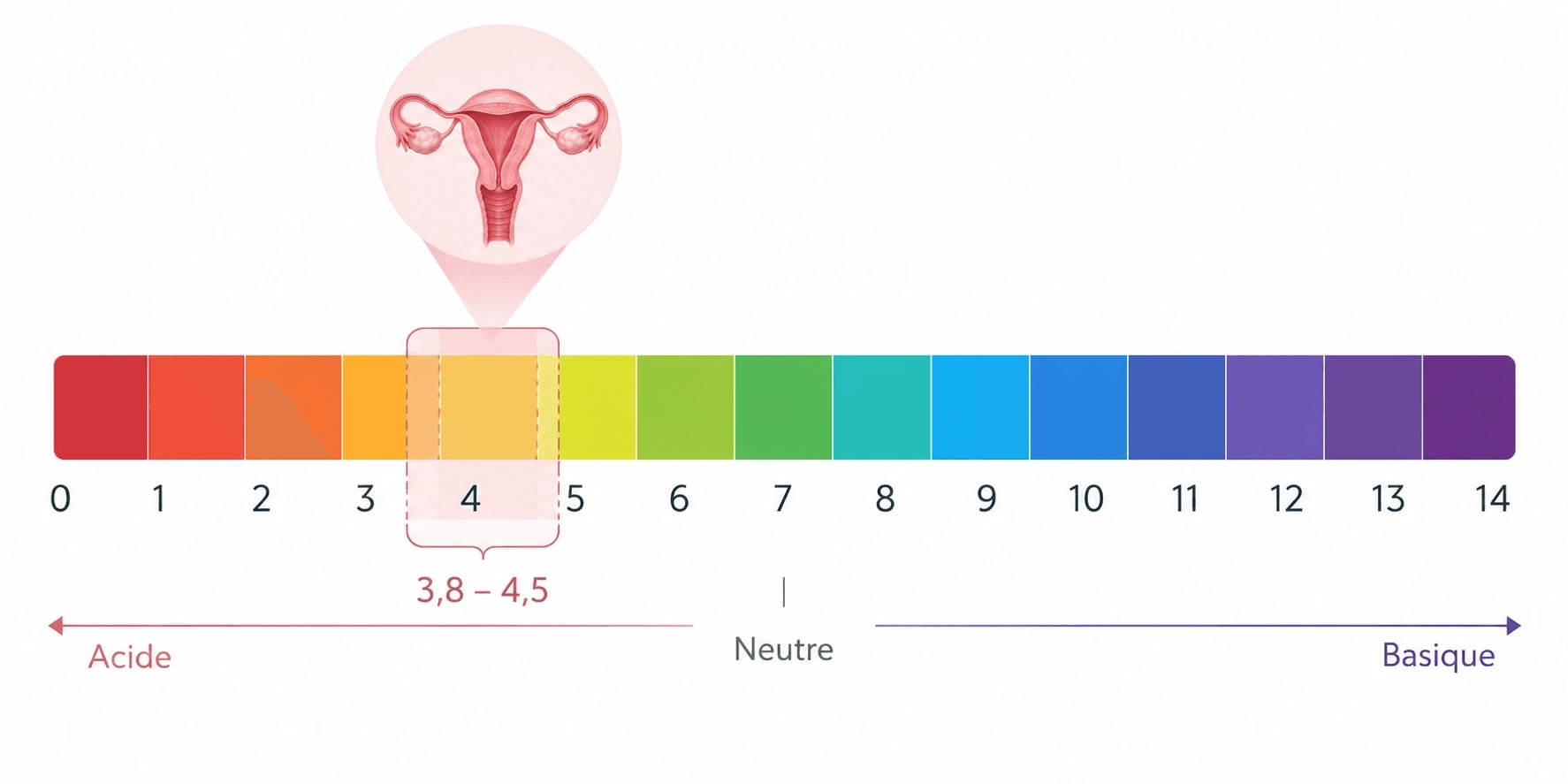
A healthy vagina is acidic, with a pH between 3.5 and 4.5. This acidity prevents undesirable germs from settling in.
When lactobacilli become scarcer, the pH rises above 4.5 and the flora becomes unbalanced. This is often when you notice a change in odour, colour, or texture.
Why it becomes thicker
It is primarily a matter of hormones. Oestrogens make the mucus fluid and stringy, while progesterone makes it thicker, white, and sticky.
Thick discharge is therefore not a symptom in itself. What matters is the context: the timing of the cycle, the presence of an odour, or itching.
Thick discharge is completely normal
Most of the time, thick discharge simply reflects the time of the cycle or a hormonal change.
Throughout the menstrual cycle
Your discharge changes throughout the month, and this is normal:
Just after your period, there is very little, sometimes with a feeling of dryness.
Before ovulation, it becomes more abundant, white or clear, and slightly sticky.
Around ovulation (around the 14th day of a 28-day cycle), the mucus becomes transparent and stretchy, a bit like raw egg white.
After ovulation, progesterone takes over: the discharge thickens and becomes white and creamy.
Before your period, it often remains thick and can leave a slightly yellowish trace as it dries on your underwear.
Thick, jelly-like discharge
If it is jelly-like and thick, but without any odour or itching, it is most often cervical mucus from the second half of the cycle (the luteal phase).
It is also observed after intercourse, when secretions mix with semen or lubricant.
Under hormonal contraception
The pill, implant, hormonal coil: all of these alter secretions. Some women then experience thicker and more regular discharge, without the visible "peak" of ovulation.
Please note: Vidal also lists the pill among the factors that promote thrush.

Arousal and sexual intercourse
During arousal, lubrication naturally increases. After intercourse, it is common to have thicker white discharge for a few hours.
On the other hand, a fishy odour that appears after sex is not trivial: it is a typical sign of bacterial vaginosis.
Menopause
With the decline in oestrogen, discharge becomes scarcer and turns white or pale yellow.
The pH rises (it can exceed 6 in cases of vaginal atrophy), and the drier mucous membrane also becomes more sensitive to irritation.
Thick white discharge and pregnancy
Are you pregnant and experiencing more discharge than before? This is very common: according to Elsan, around 75% of pregnant women are affected. The increase in oestrogen and progesterone boosts the production of mucus, which serves to protect the uterus.
Can you guess a pregnancy by your discharge?
Not really. White, thick, and abundant discharge about a week before your expected period can be an early sign.
The problem is that it looks very similar to premenstrual discharge. Only a pregnancy test can tell for sure.
What is normal during pregnancy
You do not need to worry if your discharge is:
white or slightly yellowish;
without a strong odour;
without traces of blood;
simply more abundant than before.
At the end of pregnancy, you might lose the mucus plug: a thick, sometimes pinkish or brownish mucus. This is a sign that the cervix is preparing for labour.

When to call your midwife or doctor
Pregnancy promotes thrush. As for bacterial vaginosis, it increases the risk of premature rupture of membranes and preterm birth (MSD Manual).
This is why the health insurance recommends consulting on the same day in case of unusual discharge: odour, itching, green or grey colour, blood, or continuous leakage of clear fluid. And during pregnancy, do not self-medicate without medical advice.
When thick discharge signals an infection
If this is happening to you, you are far from alone: almost all women will experience at least one episode of vaginitis in their lifetime.
Three causes are most common: thrush, bacterial vaginosis, and trichomoniasis.
Vaginal thrush (candidiasis)
It is responsible for about one in two cases of vaginitis. The culprit: a fungus, most commonly Candida albicans.
It is recognised by thick, white, lumpy discharge, which is often compared to cottage cheese. It has little to no odour.
The dominant symptoms are itching, often intense, with burning, a red vulva, and sometimes pain during intercourse. The pH, however, remains normal (4.5 or lower).
Several factors promote it: antibiotics, pregnancy, the pill, diabetes, vaginal douching, or wearing tight synthetic clothing.
Bacterial vaginosis
No fungus here: it is an imbalance of the flora. Lactobacilli decrease and make room for bacteria like Gardnerella.
The discharge is rather thin, abundant, greyish, or yellowish.
The most telling sign is a fishy odour, which is more noticeable after intercourse or during periods. Itching is rare and the pH exceeds 4.5.
Good to know: vaginosis can affect women who are not sexually active, and it has a tendency to recur.
Sexually transmitted infections
Trichomoniasis causes frothy, yellow-green, abundant, and foul-smelling discharge.
Chlamydia and gonorrhoea can lead to yellow or greenish discharge, bleeding between periods, or lower abdominal pain.
But beware, they often go unnoticed. After a new partner, getting tested is therefore a good idea.

Other possible causes
Irritation or an allergy to scented soap, wipes, sanitary products, or a latex condom.
A foreign body, such as a forgotten tampon. The discharge is then extremely foul-smelling: consult a doctor quickly.
Vaginal atrophy, after menopause or during breastfeeding.
Colour, texture, odour: how to read your discharge
This table summarises the most common situations. It gives you a clue but does not replace a diagnosis.
Appearance of discharge | Odour |
|---|---|
White, thick, creamy | None or mild |
Transparent, stringy | None |
White, thick, abundant | None |
White, lumpy, "cottage cheese" | Faint |
Grey or yellowish, thin | Fishy |
Yellow-green, frothy | Strong |
Yellow or green | Variable |
Scant, pale yellow | None |
Please note: thrush does not alter the pH, whereas vaginosis causes it to rise. Measuring your pH therefore helps to tell the difference between two infections that look alike but are not treated in the same way at all.
When should you worry?
The thickness of the discharge alone is not enough to indicate an infection. It is primarily its change over time and the presence of other symptoms that should catch your attention.
Consult a doctor quickly if you are pregnant or think you might be, if you have lower abdominal pain, a fever, burning when urinating, or bleeding outside of your period.
It is also recommended to book an appointment if this is the first time you are experiencing these symptoms, if your discharge becomes yellow, green, or grey, has a foul odour, persists, or returns after treatment.
A consultation is also recommended in case of frequent episodes (4 or more times a year), diabetes, weakened immunity, or after a change of sexual partner.
Conversely, white or creamy discharge, without an unusual odour or discomfort, that varies throughout the cycle is generally normal.
If you have previously had diagnosed thrush and the symptoms are identical, an over-the-counter antifungal treatment can be used.
What to do if your discharge does not seem normal?
The best approach is not to play guessing games.
Thrush and vaginosis look similar but are not treated the same way: an antifungal will not cure vaginosis, and vice versa.
1. Observe for 2 to 3 days
Note the texture, colour, odour, presence of itching, and the day of your cycle.
If everything returns to normal with your period or the phase change, it was very likely hormonal.
2. Check at home with Santelle
The Santelle vaginal test analyses 6 biomarkers from a simple swab. The result is displayed within 10 minutes in the app. The test is CE marked (IVDR) and designed in Switzerland.
In practice, it allows you to:
know if your flora is balanced or if an imbalance is developing;
arrive at the doctor's or pharmacy with precise information;
track progress after treatment or in case of recurrence.
You can find it online and in about a dozen pharmacies in French-speaking Switzerland (Amavita, Sun Store, Coop Vitality).
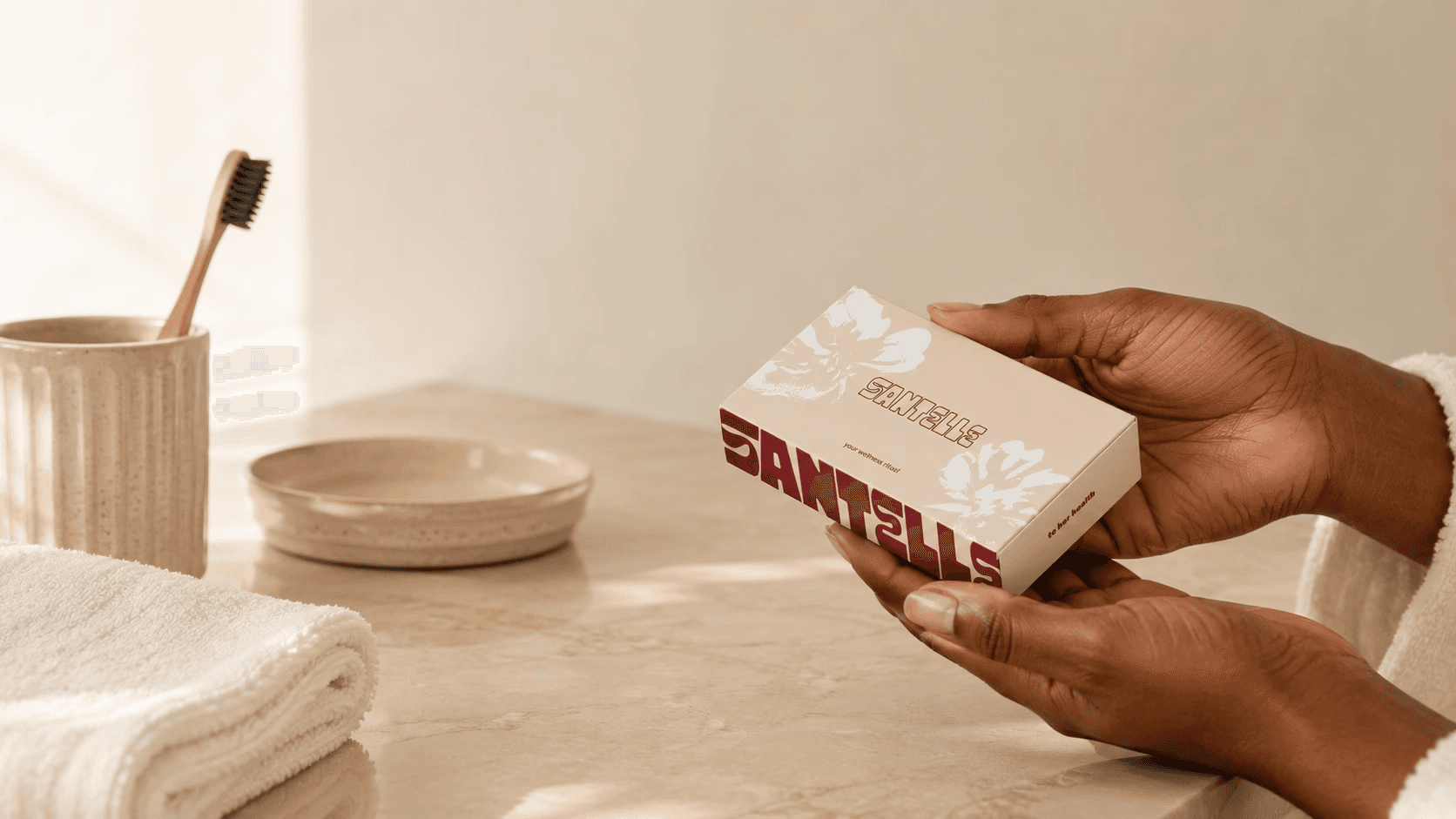
Keep in mind that a self-test guides you but does not replace a consultation, especially during pregnancy or in case of warning signs.
Our tips for taking care of your vaginal flora
The vagina cleanses itself naturally. To preserve its balance, the key is to avoid practices and products that can disrupt its flora.
Wash only the vulva, once or twice a day, with water or a mild, fragrance-free cleanser.
Dry it gently after showering and opt for cotton underwear, avoiding overly tight clothing.
When using the toilet, wipe from front to back and change sanitary products regularly during your period. After sex, urinating can also help limit the risk of urinary tract infections.
On the other hand, avoid vaginal douching, scented soaps, antiseptic gels, and intimate wipes. It is also best not to keep a wet swimsuit on for long.
After taking antibiotics, some women may be more prone to vaginal thrush, as antibiotics can alter the balance of the flora.
If thrush is recurrent, speak to your doctor or pharmacist to investigate the cause and adapt your care.
Frequently asked questions
I have thick white discharge every day, is this normal?
Yes, in the vast majority of cases. The vagina produces secretions every day, averaging 1 to 4 ml, which clean and protect it. Their appearance changes throughout the cycle.
After menstruation, they are scarce and sticky. Around ovulation, they become clear, abundant, and stretchy, like egg white.
After ovulation and until menstruation, they become thick, white, and creamy again under the influence of progesterone. As long as they do not smell bad, itch, or burn, there is no reason to worry.
Why is my discharge thick and white just before my period?
This is the luteal phase. After ovulation, progesterone thickens the cervical mucus, which becomes opaque, creamy and sometimes a bit sticky.
This natural plug closes the cervix for the end of the cycle. This is the most classic appearance of discharge in the week preceding your period.
My discharge looks like cottage cheese but it doesn't itch. Thrush or not?
This is the most common question, and the answer is nuanced. A yeast infection (thrush) typically causes thick, lumpy, "cottage cheese-like" white discharge, with intense itching, a red vulva, and sometimes burning when urinating.
Without itching, a yeast infection is still possible but becomes much less likely.
Discharge that is simply thick or in small clumps, with no other symptoms, is often hormonal. If doubt persists for several days, or if the appearance is new to you, a vaginal swab at the doctor's or midwife's clinic will settle the matter in a few minutes.
I treated myself for a yeast infection and it isn't clearing up. Why?
Because it might not have been a yeast infection. Self-diagnosis is often wrong: bacterial vaginosis, an STI, irritation (soap, panty liners, hair removal), or eczema can cause similar symptoms.
If an over-the-counter antifungal treatment (pessary and cream) does not resolve the problem within 3 to 7 days, or if thrush returns more than 3 or 4 times a year, consult a doctor for a swab rather than repeating the treatment.
My knickers have bleached/discoloured patches, is it serious?
No, it is actually quite a good sign. Healthy discharge is acidic (pH 3.5 to 4.5) thanks to lactobacilli, and this acidity slightly discolours dark fabrics as it dries. This does not indicate an infection or a hygiene problem.
I have a lot of white discharge after sex, what is it?
Several explanations often combine. Arousal increases lubrication, semen mixes with secretions and flows out over several hours, and friction can cause discharge to "froth" into a white deposit. This is normal.
On the other hand, a fishy odour that appears or worsens after intercourse is a classic sign of bacterial vaginosis: semen, being alkaline, releases the molecules responsible for the odour. This case warrants a consultation.
I have thick white discharge and my period is late. Am I pregnant?
Perhaps, but discharge does not allow you to know for sure. In early pregnancy, progesterone levels remain high, and therefore discharge remains white, milky and often more abundant.
It looks exactly the same as before a period.
The only reliable way is a urine test, from the first day of a missed period or 3 weeks after the unprotected intercourse. A delay can also be explained by stress, a change in weight or activity, or stopping contraception.
Since I started taking the pill (or got a hormonal IUD), my discharge has changed.
This is expected. Progestogens intentionally thicken the cervical mucus to block sperm, hence the thicker and more "constant" discharge.
I'm pregnant and I have a lot of white discharge, is that normal?
Yes. Leukorrhoea during pregnancy is caused by the increase in oestrogen and blood flow, and it often intensifies as the trimesters progress.
The discharge should remain white or milky, without a strong odour. During pregnancy, consult your doctor on the same day in the event of a continuous watery discharge (possible rupture of the amniotic sac), bleeding, a strong odour, a change in colour, itching or pain.
At the end of pregnancy, the loss of a clump of thick mucus, sometimes tinged with pink or brown, often corresponds to the mucus plug.
There are white deposits between my lips even when I wash.
This is most often a normal mixture of dried discharge and sebum, sometimes called smegma, which settles in the folds.
Rinsing with clean water or with a gentle, pH-neutral cleanser, only on the outside, is sufficient. If the build-up is accompanied by redness, itching, or an unusual odour, consider a yeast infection.
Written by
Yasmina Akni
SEO and press relations, Santelle
Yasmina is an SEO specialist at Santelle, with a degree in biotechnology for health.