

Yeast infections
Yeast infection during pregnancy: symptoms, treatment, and risks

Zineb Sadki
Editorial writing, Santelle
If you have been dealing with an annoying itch for a few days, discharge that looks different, and that worrying question on your mind at the end of the day: could this harm my baby?
First, rest assured: a vaginal yeast infection is one of the most common infections during pregnancy. It affects about one in five pregnant women, and up to one in three during the third trimester.
In the vast majority of cases, it is mild and will not affect your pregnancy or your baby's development.
However, it should be treated quickly, especially near your due date. Here is what you need to know: how to spot it, why it happens, and above all, how to treat it safely.
What is a vaginal yeast infection?
A vaginal yeast infection (or vaginal candidiasis) is a common fungal infection caused by an overgrowth of a tiny fungus, most often Candida albicans.
This fungus naturally lives in the vagina in small, harmless amounts without causing any trouble.
An infection happens when the natural balance of your vaginal flora is disrupted, allowing the fungus to grow out of control and cause irritation.
It is important not to confuse a yeast infection with bacterial vaginosis (BV). BV is another very common infection during pregnancy, but it is caused by an imbalance of bacteria (such as Gardnerella vaginalis) rather than a fungus.
Because the symptoms (such as odor and the look of the discharge) and treatments are different, it is always best to get a professional medical diagnosis rather than trying to figure it out yourself.

Why does pregnancy make yeast infections more likely?
Pregnancy creates the perfect environment for Candida albicans to thrive, for several reasons:
Rising estrogen and progesterone levels: These two hormones increase significantly during pregnancy, changing the environment of your vagina.
More glycogen: Higher sugar levels in the vaginal lining literally feed the yeast, helping it grow.
Changes in vaginal pH and local immunity: These shifts weaken your body's natural ability to keep yeast levels in check.
Gestational diabetes: Affecting about 4% of pregnant women, this is an extra risk factor. Higher sugar levels in your tissues make it much easier for yeast to grow.
As a result, yeast infections affect about 20% of pregnant women. This number rises to nearly 33% in the third trimester, when symptoms are most common.
What are the symptoms of a yeast infection during pregnancy?
The symptoms are usually quite easy to recognize:
Itching (pruritus) around the vulva and vagina, which can sometimes be intense
Redness and swelling of the labia
A burning feeling, especially when urinating
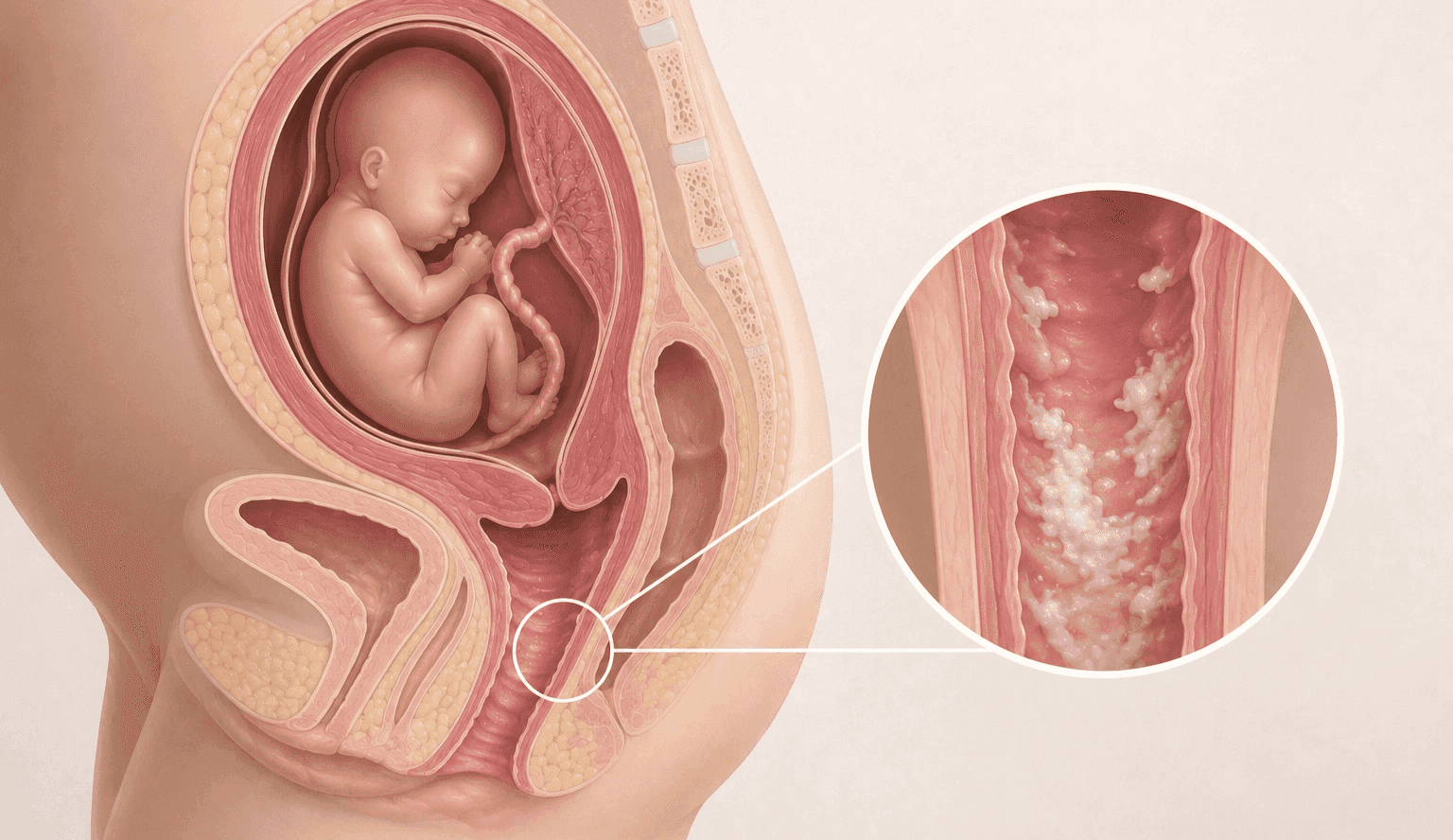
Thick, white, clumpy discharge that looks like cottage cheese and typically has no smell
Pain or discomfort during sex
If your discharge has a strong or unusual smell, or if you have cramping, pelvic pain, or bleeding, these are not typical signs of a simple yeast infection. You should contact your doctor or midwife right away to rule out other issues.
Is a yeast infection dangerous for my baby?
This is usually the biggest concern for expectant mothers, and the answer is highly reassuring.
A vaginal yeast infection is a local infection, meaning it does not cross the womb. It does not cause miscarriages and will not harm your baby during pregnancy.
However, there is an important difference to keep in mind: unlike a simple yeast infection, an untreated bacterial vaginosis (BV) or sexually transmitted infection (STI) can cause more serious complications, such as contractions or early labor.
This is why it is so important to see a healthcare provider when you have symptoms, to ensure you get the right diagnosis and treatment.
The main concern with a yeast infection is actually around the time of birth.
As the baby passes through the birth canal, they can catch the yeast infection, which is known as neonatal candidiasis.
In newborns, this usually shows up as a diaper rash, a digestive issue, or oral thrush (white patches in the baby's mouth).
While this infection is mild and easy to treat, it is best to avoid it. That is why it is so important to treat a yeast infection before you give birth, especially if you get one in your third trimester.
How do I know for sure if I have a yeast infection?
When dealing with itching or unusual discharge, it can be hard to tell if it is a yeast infection, BV, or something else.
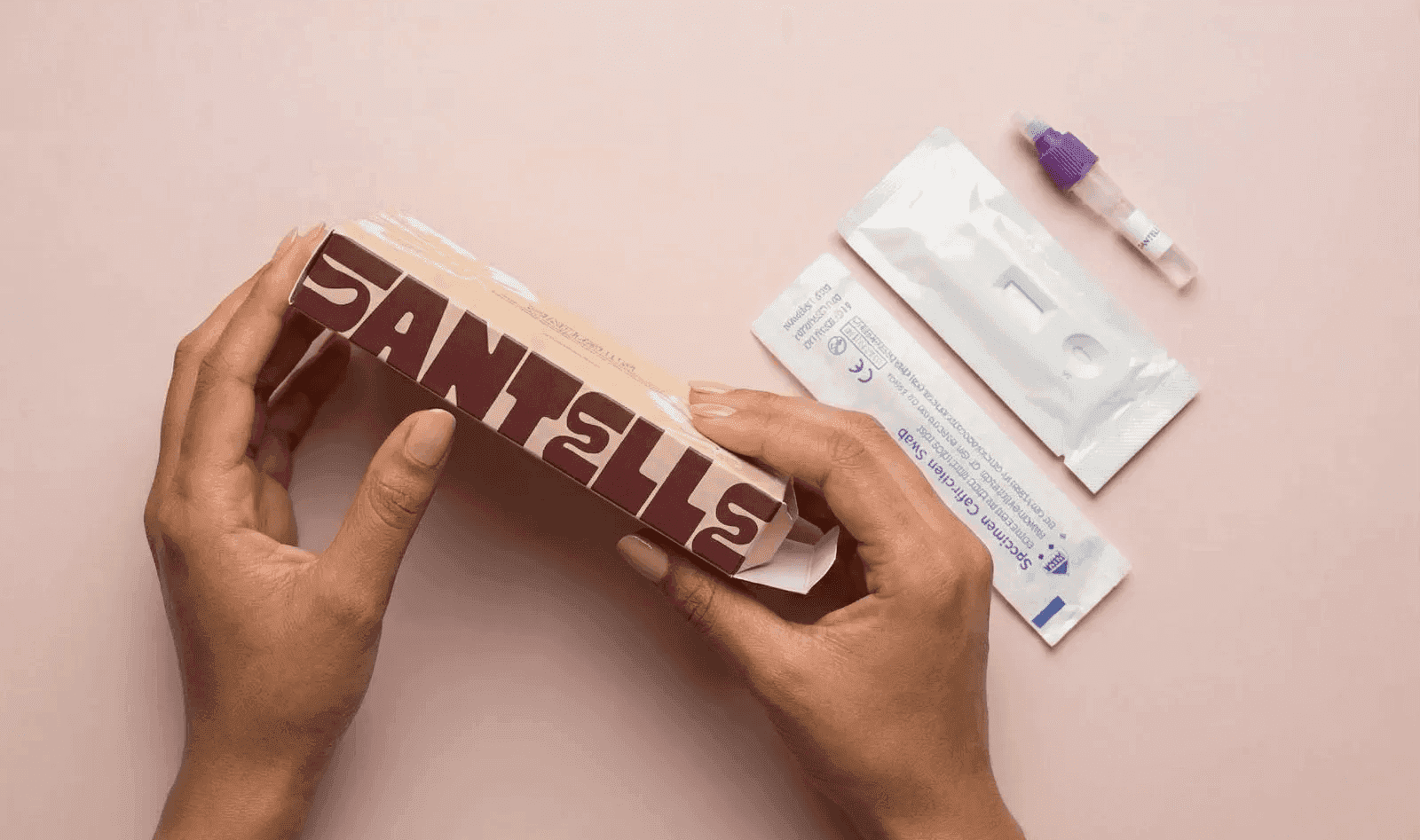
An at-home test like Santelle can help you check the balance of your vaginal flora over time. However, this is meant to support, not replace, a visit to your midwife or doctor, who can confirm the diagnosis and give you the right treatment.
How do you treat a yeast infection during pregnancy? Safe options
First rule: avoid self-treating.
Even if you have had a yeast infection before and feel sure you know the symptoms, talk to your midwife, gynecologist, or doctor before starting any treatment.
Pregnancy requires specific safety measures that you might not be aware of.
The standard and safest treatment during pregnancy is local therapy, using vaginal inserts (suppositories/pessaries) and creams containing azole antifungal medications.
Key points to remember:
Treatment during pregnancy usually lasts 3 to 7 days, which is longer than the typical 1 to 3 days needed when you are not pregnant.
It is important to treat both the inside of the vagina and the outside area (vulva) using both the inserts and cream for the best results.
Vaginal inserts are best used at bedtime, exactly as prescribed by your healthcare provider.
Can I use natural remedies to relieve a yeast infection while pregnant?
It can be tempting to try a home remedy while waiting for an appointment or to avoid medicine.
To be clear: there are no natural remedies proven to successfully cure an active yeast infection during pregnancy.
A few safety warnings to keep in mind:
Essential oils (like tea tree, lavender, or oregano) are not recommended during pregnancy. They should not be used even if diluted, applied topically, or taken by mouth, as there is not enough safety data on how they affect your baby.
Probiotics (taken by mouth or used vaginally) can help restore healthy vaginal bacteria alongside your treatment, but they cannot cure a yeast infection on their own.
Always talk to your midwife or doctor before trying any alternative remedies, even if they seem completely harmless.
FAQ: Common questions about yeast infections and pregnancy
Can a yeast infection cause premature birth?
No, a simple yeast infection does not cause premature birth. That risk is linked to untreated bacterial vaginosis (BV), which is why getting an accurate diagnosis from a healthcare professional is so important.
Can I have sex if I have a yeast infection while pregnant?
It is not dangerous for your baby, but sex can be uncomfortable or even painful until the infection is cleared. It is usually best to wait until you have finished your treatment.
Is it normal to keep getting yeast infections during pregnancy?
Yes, it is very common to get them more than once. The hormonal changes of pregnancy create an ideal environment for yeast to grow throughout the entire nine months. Be sure to let your midwife or doctor know about any new symptoms.
Should I treat a yeast infection even if it doesn't bother me much?
Yes, especially as you get closer to your due date. Even if your symptoms are mild, an untreated infection can be passed to your baby during birth.
Does my partner need to be treated too?
Usually, no. Treatment for your partner is only recommended if you keep getting infections repeatedly, or if your partner has symptoms like redness or itching. Ask your doctor or midwife for advice if you are concerned.
Frequently asked questions
Can a vaginal yeast infection cause premature birth?
No, a simple vaginal yeast infection does not cause premature birth. That risk mainly concerns untreated bacterial vaginosis, which is why it matters to have the diagnosis confirmed by a health professional.
Can I have sex if I have a vaginal yeast infection while pregnant?
It is not dangerous for the baby, but sex can be uncomfortable or even painful while the infection is untreated. It is better to wait until the end of treatment.
Yeast infections keep coming back during pregnancy: is that normal?
Yes, recurrences are common during pregnancy because the hormonal environment encourages the fungus to multiply across all nine months. Every new episode should be reported to your midwife or doctor.
Should I treat a yeast infection even if it barely bothers me?
Yes, especially late in pregnancy: even with few symptoms, a yeast infection left untreated before delivery increases the risk of transmission to the baby as it passes through the vagina.
Should my partner be treated too?
Generally no, except with very recurrent yeast infections or if the partner has symptoms themselves (redness, itching on the glans). Ask your health professional for advice if that is your case.
Written by
Zineb Sadki
Editorial writing, Santelle
Zineb is a writer at Santelle and covers intimate health and the vaginal microbiome.