
Tests and diagnosis
Vaginal pH test: what does it actually measure?

Roxanne Sabbag
Co-founder and biomedical engineer, Santelle
Are you wondering if your vaginal pH is normal, what a pH higher than 4.5 means, or if a pH test can help you find out if you have thrush or bacterial vaginosis?
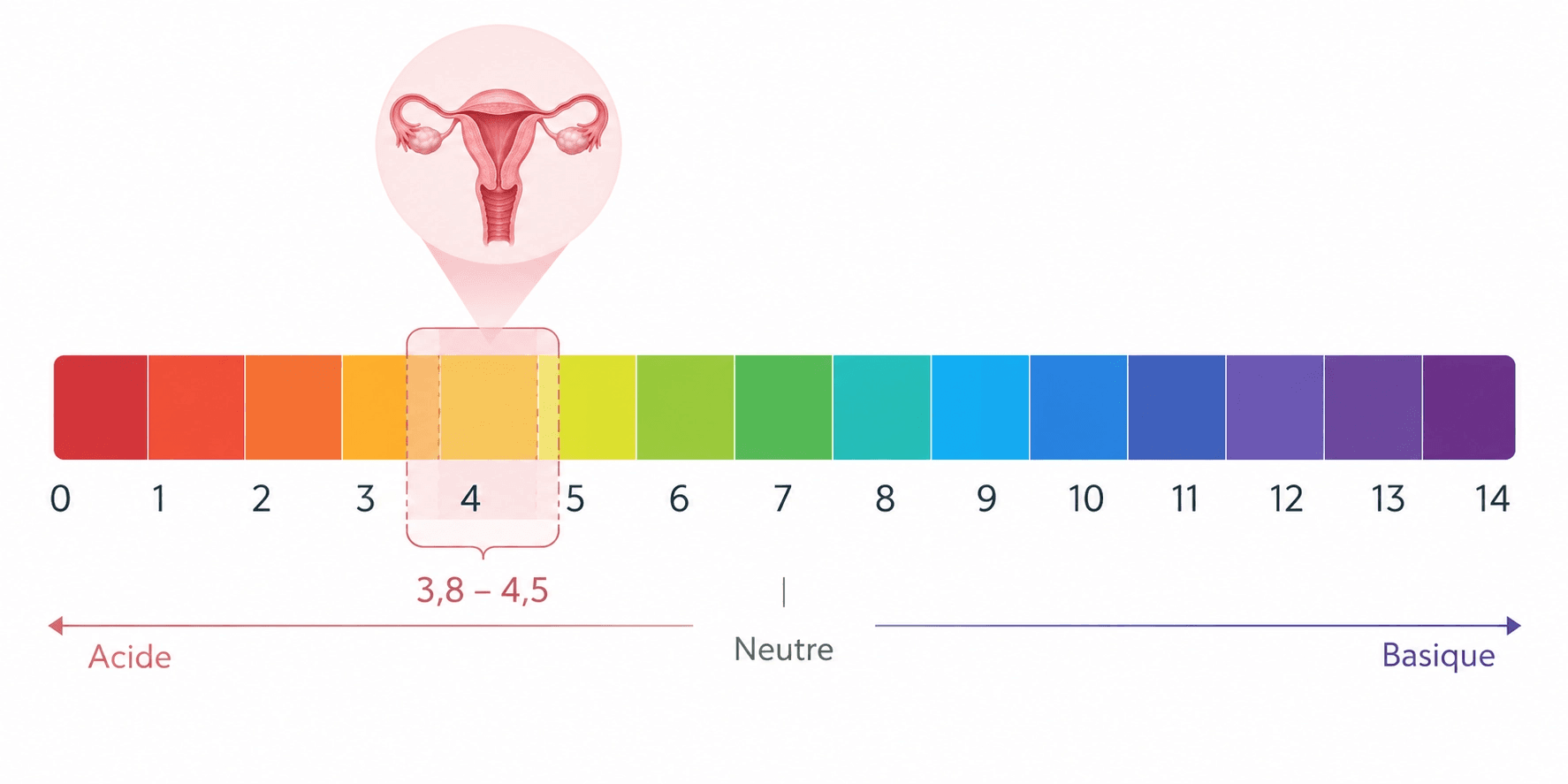
A vaginal pH test simply measures the acidity of vaginal secretions using a strip or an applicator. In a woman of childbearing age, vaginal pH is generally between 3.8 and 4.5.
But take care: pH alone does not determine the cause of symptoms such as unusual discharge, odour, itching or burning.
So, how should you interpret the result of a vaginal pH test, and what can it actually tell you?
What is vaginal pH?
The vagina is naturally acidic. In a woman of childbearing age, her vaginal pH is generally between 3.8 and 4.5.
This acidity contributes to the natural balance of the vagina. It is notably linked to the presence of lactobacilli, bacteria naturally present in the vaginal flora.
However, pH can vary depending on life stages and certain situations. It may be different in particular:
before puberty;
during menstruation;
during pregnancy;
after sexual intercourse;
after using certain vaginal products.
The result of a pH test must therefore always be interpreted taking the context into account.
How to interpret the result of a vaginal pH test?
The reading mainly depends on the value obtained.
A pH between 3.8 and 4.5
A result between 3.8 and 4.5 generally corresponds to an acidic vaginal environment, which is considered normal for a woman of childbearing age.
But a normal pH does not necessarily mean everything is fine.
For example, a vaginal yeast infection (thrush) can be present despite a normal pH. The pH test therefore cannot rule out thrush.
If you have symptoms despite a normal pH, such as itching, burning or unusual discharge, do not rely solely on the test result.
A pH higher than 4.5
A vaginal pH higher than 4.5 means the vaginal environment is less acidic than usual.
This can be observed particularly in cases of bacterial vaginosis. But a high pH does not automatically mean you have vaginosis.
Other situations can temporarily increase pH, including:
menstruation;
recent sexual intercourse, as semen is alkaline;
menopause and the drop in oestrogen;
certain products used in the vagina.
The pH is therefore a clue, not a diagnosis.
A pH lower than 3.8
A pH lower than 3.8 generally does not identify a specific infection.
The result can depend particularly on when you perform the test and how you use it. If you have symptoms, it is best not to try and interpret this figure alone.
In any case, check the values indicated in the instructions of your test, as thresholds can vary depending on the device.
What symptoms can accompany a change in vaginal pH?
Certain situations naturally lead to questions about vaginal pH and considering a test:
heavier discharge or a different texture;
an unusual odour, particularly a strong or fishy smell;
itching;
burning sensations;
discomfort during sexual intercourse;
vaginal symptoms that return regularly.

Can a pH test detect thrush or vaginosis?
No, a vaginal pH test cannot directly detect thrush.
A vaginal yeast infection can be associated with a pH that remains within the normal range. You can therefore have thrush with a vaginal pH between 3.8 and 4.5.
Symptoms of thrush can notably include:
significant itching;
burning;
irritation of the vulva;
thick, white discharge;
discomfort or pain during intercourse.
However, these symptoms are not specific to thrush. Other issues can cause similar signs.
A normal pH therefore does not rule out thrush.
Which vaginal test to choose depending on what you want to know?
The choice mainly depends on what you are trying to check:
pH strip: to simply measure the acidity of the vagina.
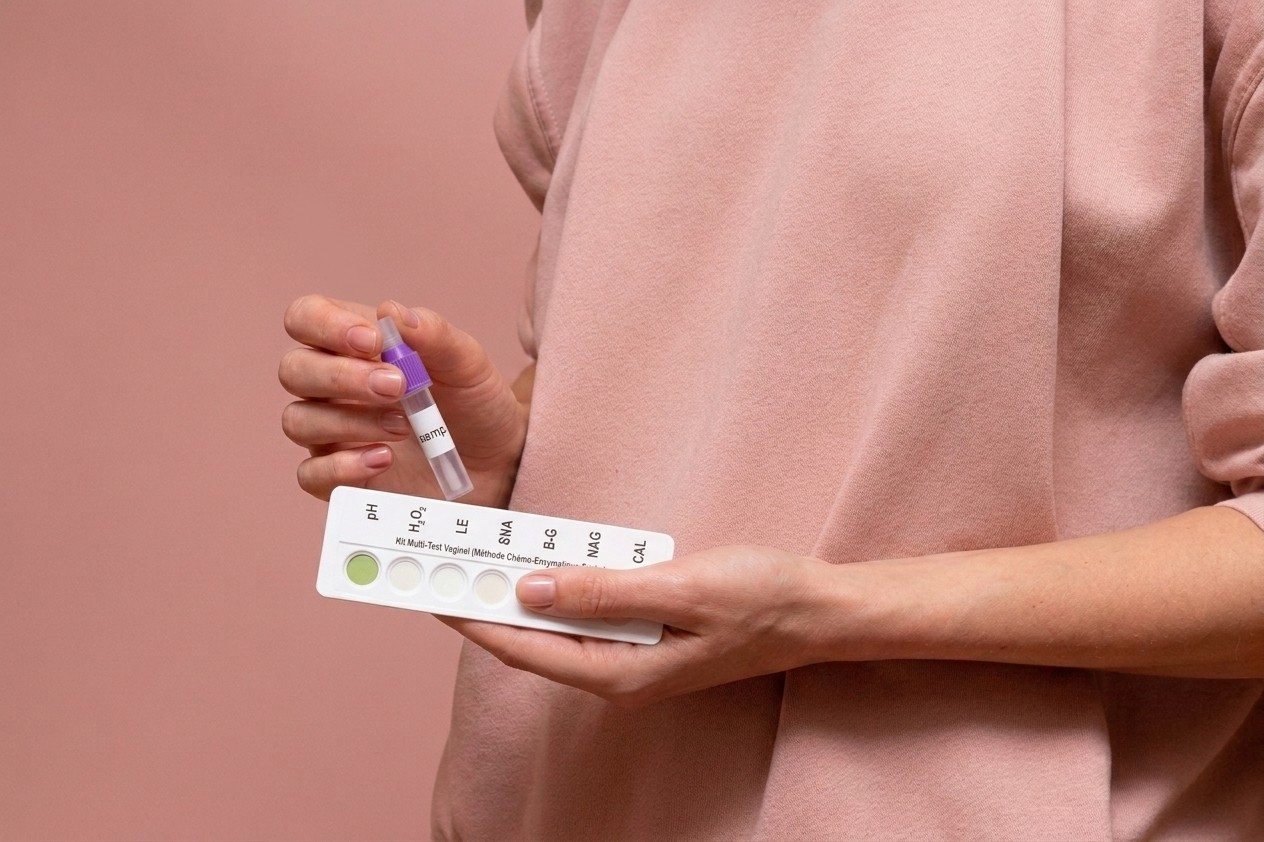
Multi-biomarker test like Santelle: to obtain more information about the vaginal environment, beyond just pH.
Vaginal swab: to investigate the cause of symptoms more precisely, with the help of a healthcare professional.
pH test, Santelle or vaginal swab: what is the difference?
Test | What it measures and what it is used for |
|---|---|
pH strip | Vaginal pH. Simple and quick, but does not identify the cause of an imbalance. |
Santelle | Multiple biomarkers, including pH. Gives a more complete overview of the vaginal environment. |
Vaginal swab | Allows the cause of symptoms and certain microorganisms to be investigated in a laboratory. |
Home tests provide indications and do not replace medical advice in case of significant or persistent symptoms.

How to correctly use a vaginal pH test?
To obtain a reliable result, a few simple precautions make all the difference:
Choose the right time. Avoid testing during menstruation, in the hours following sexual intercourse, or just after washing the intimate area with a product, as these factors can temporarily alter pH.
Wash your hands before handling the test, without using scented soap on the area being tested.
Position the strip or applicator correctly in contact with the vaginal wall, following the manufacturer's instructions precisely: a contact that is too brief or poorly placed can distort the reading.
Respect the indicated waiting time before reading the result; reading too early or too late can alter the observed color.
Compare the colour obtained to the provided scale, in good lighting conditions, immediately after the waiting time.
Note the result along with the context (period of the cycle, symptoms present that day): this information is useful if you subsequently consult a healthcare professional.
Frequently asked questions
Can vaginal pH change after having sex?
Yes. Semen is alkaline, which can temporarily raise vaginal pH after intercourse. It is therefore advisable to wait a few hours before testing to obtain a more representative result.
Where to buy a vaginal pH test?
Vaginal pH tests (strips, self-tests) are available in pharmacies and parapharmacies, as well as from online retailers specialising in intimate health. It is recommended to check the device's compliance (CE marking, clear instructions) before purchasing, such as our multi-biomarker self-test.
Is a vaginal pH test reliable?
A properly used vaginal pH test provides a reliable indication of the acidity of the vaginal environment at a given moment. However, its reliability depends on compliance with the instructions for use (timing of the test, contact with the wall, reading time) and its intrinsic limitations: it is not a substitute for a medical diagnosis and does not detect all infections with the same level of accuracy.
Can you do a vaginal pH test during pregnancy?
Yes, a vaginal pH test can be carried out during pregnancy. Vaginal pH may vary slightly during pregnancy due to hormonal changes. If you are in any doubt about a result or have symptoms, it is recommended to speak with your midwife or gynecologist rather than adjusting any treatment on your own.
Does a vaginal pH test hurt?
No. A vaginal pH test, whether a strip or a self-test, does not normally cause any pain. It involves a simple, brief contact between the device and the vaginal wall, without any invasive procedure.
Is a vaginal pH test reimbursed by Social Security?
Vaginal pH self-test kits sold in pharmacies or online, carried out at home without a prescription, are generally not reimbursed. However, a vaginal swab performed in a laboratory under a medical prescription may be covered under the standard reimbursement terms for biological analyses.
Written by
Roxanne Sabbag
Co-founder and biomedical engineer, Santelle
Roxanne co-founded Santelle and is a biomedical engineer specialising in vaginal health.