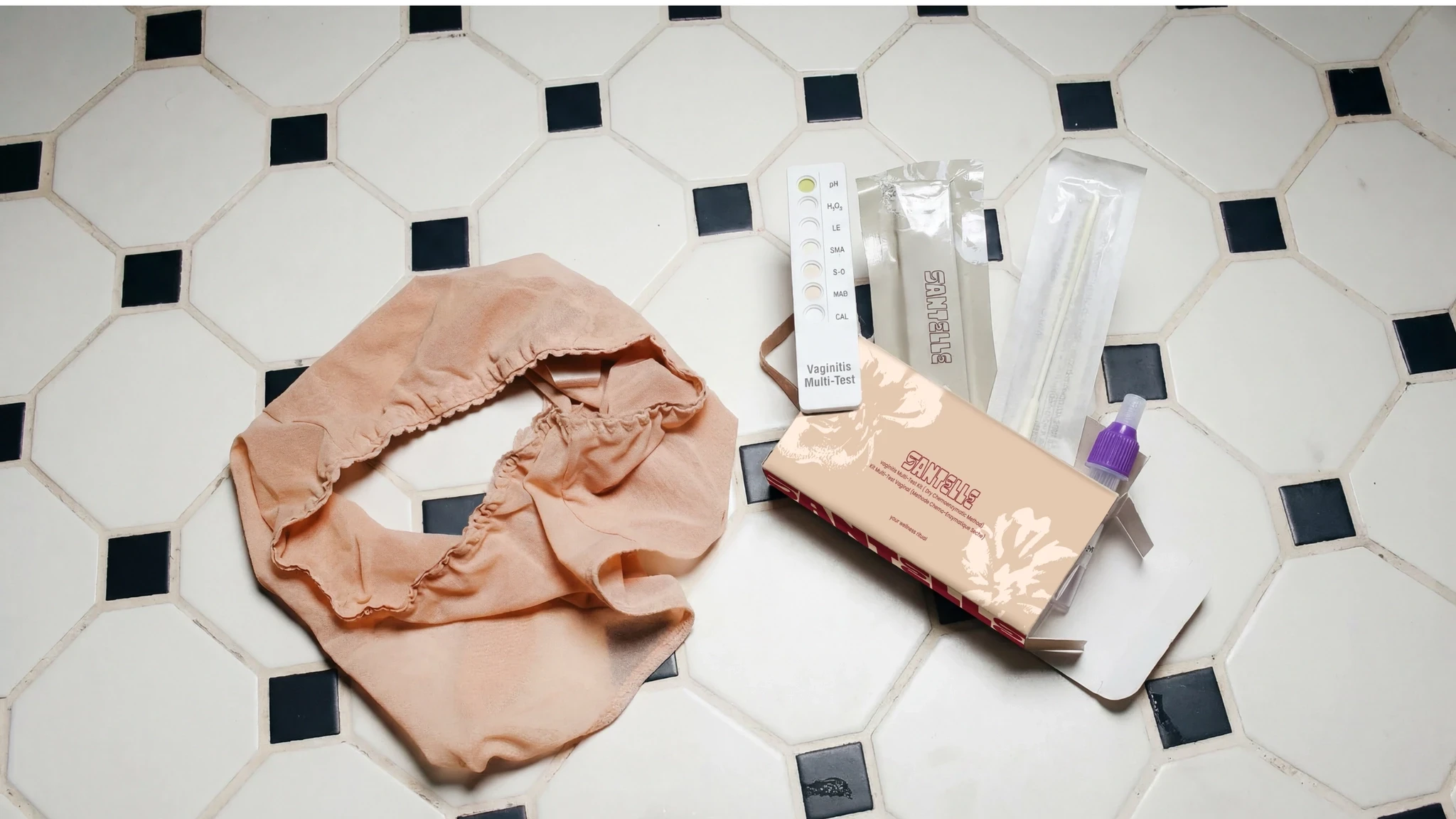

Infections
Bacterial vaginosis (BV) testing: rapid self-tests, vaginal pH, or a swab?

Zineb Sadki
Editorial writing, Santelle
A bacterial vaginosis (BV) test can take several forms: a vaginal pH test strip, an at-home multi-biomarker test, or a vaginal swab analyzed in a medical lab.
These methods do not all provide the same level of information. Some act as a helpful starting point to point you in the right direction, while others provide a formal medical diagnosis.
Here is a breakdown of what each test can tell you, and how to choose the right BV test for your situation.
What is a bacterial vaginosis test?
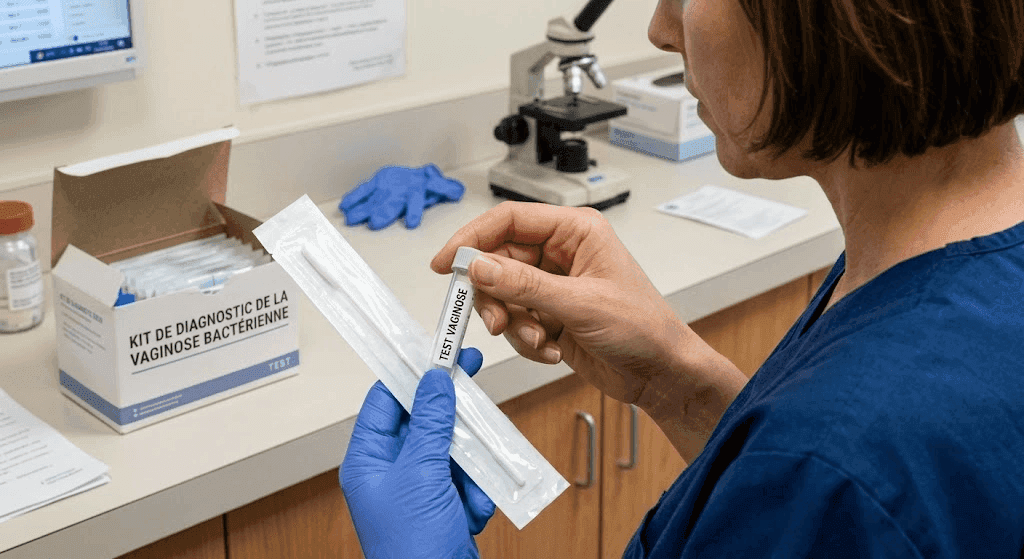
A bacterial vaginosis test is an evaluation used to check for an imbalance in your vaginal microbiome. This can be done at home using pH strips or multi-biomarker tests, or by a doctor using clinical assessments (such as Amsel criteria, Nugent scoring, or PCR testing).
It helps guide or confirm whether you have BV, a very common vaginal condition that affects up to one in three women at some point in their lives.
How do you know if you have bacterial vaginosis?
Several symptoms might prompt you to check for bacterial vaginosis:
thin, watery vaginal discharge;
discharge that is white or grayish in color;
an unusual, fishy odor, which is often more noticeable after sex;
in many cases, no noticeable symptoms at all.
This last point is exactly what makes it tricky.
According to the World Health Organization, bacterial vaginosis can be completely asymptomatic. This means diagnosing it relies on a clinical evaluation or lab tests rather than symptoms alone.
In other words, you can still have BV even if you do not feel any discomfort, and having unusual discharge does not automatically mean you have BV.
This gray area is why we have different testing options, ranging from simple home tests to advanced medical lab tests.
What types of BV tests are available?
Here is an overview of the main testing options, from the simplest at-home tests to advanced laboratory analyses.
Test Type | Where to Get It | What It Measures | What It Tells You |
|---|---|---|---|
Vaginal pH test | At home or at the doctor's office | The acidity level of your vagina | A potential imbalance in your microbiome, though it cannot tell you the exact cause |
Multi-biomarker home test | At home | Several vaginal indicators at once (such as pH and other key markers) | A clearer picture of the type of imbalance present |
Clinical exam & Amsel criteria | Doctor's office | Discharge appearance, odor, pH, and the presence of "clue cells" (vaginal cells covered in bacteria) under a microscope | Helps your healthcare provider make a reliable clinical diagnosis |
Nugent score | Medical laboratory | The balance of different bacteria in a sample using a special staining method (Gram stain) | An objective, detailed assessment of your vaginal health profile |
Molecular tests (PCR, Gardnerella test, Aptima BV) | Medical laboratory | The presence and amount of specific bacterial DNA, such as Gardnerella vaginalis | An accurate identification of the specific bacteria causing the imbalance |
Each approach in this table provides a different level of detail: the first two are helpful at-home screening tools, while the last three provide a formal medical diagnosis.
Understanding this difference is key to managing your vaginal health.
Can you do an at-home bacterial vaginosis test?
Yes, you can easily do a preliminary check at home without waiting for a doctor's appointment.
There are currently two main types of at-home BV tests available.
Multi-biomarker home tests
This type of test goes beyond just checking your pH level.
These bacterial vaginosis home tests, such as the one by Santelle, check multiple vaginal indicators at the same time. This gives you a more complete picture of a potential imbalance rather than relying on just one data point.
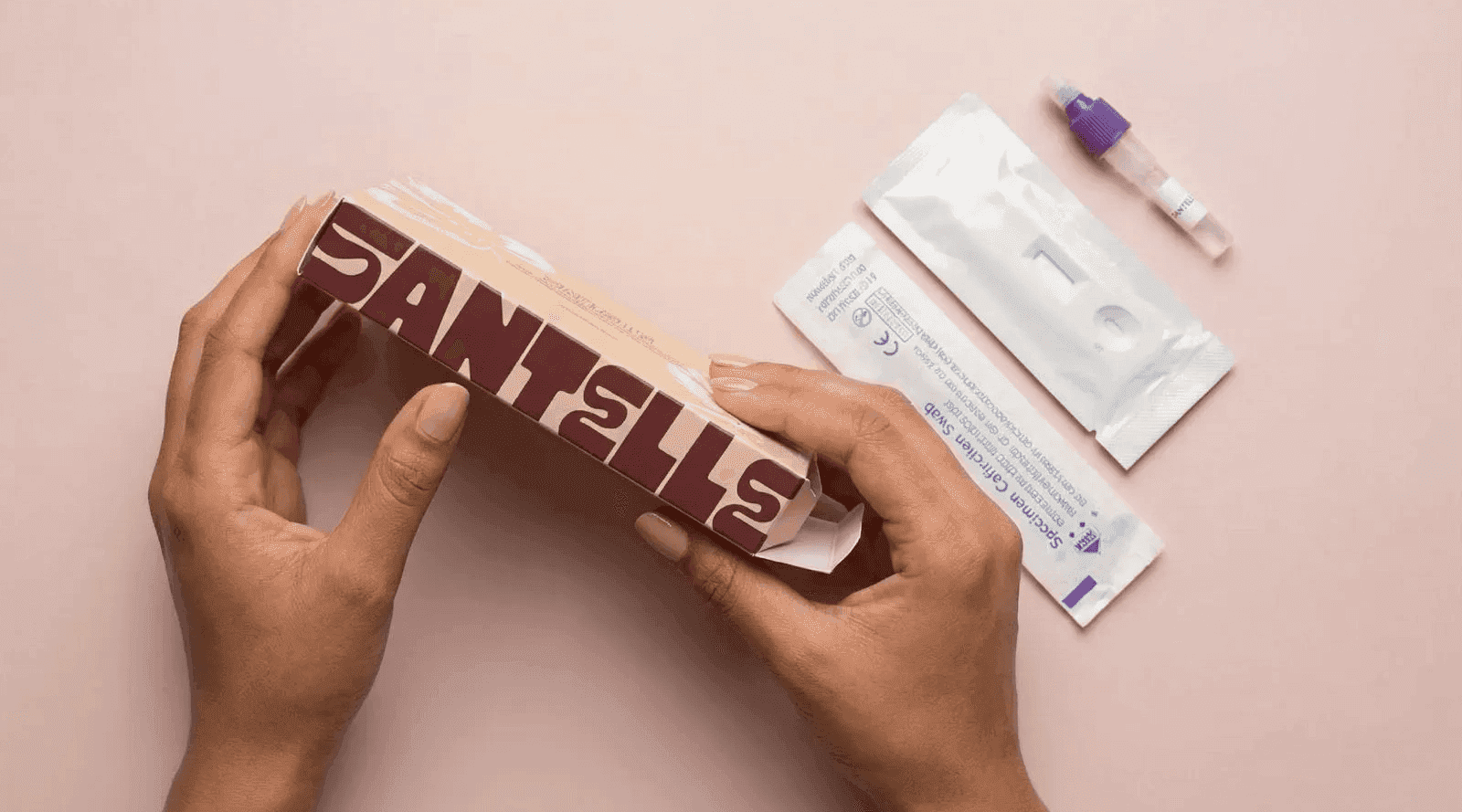
The main benefit of checking multiple biomarkers is that it provides a clearer, more detailed picture of your vaginal health, helping you make a more informed decision before you see a doctor.
While these tests are not a replacement for a doctor's diagnosis, they are a great first step to help you understand your body and decide if you need to schedule a clinical visit.
Vaginal pH tests
Vaginal pH testing is the most common and easiest home test to find.
These usually come as a small test strip or swab that you gently press against the vaginal wall for a few seconds. You then compare the color of the strip to a color chart.
The science behind it is simple: a healthy, balanced vagina is naturally acidic (with a pH typically between 3.8 and 4.5), which is maintained by good bacteria called lactobacilli.
When this balance is disrupted—as it is with BV—the pH level typically rises above 4.5.
A vaginal pH test simply flags whether your acidity levels are out of the normal range.
Is a pH test enough to detect BV?
A high pH level suggests you might have BV, but it cannot confirm it for sure. Similarly, a normal pH level does not completely rule it out.
Relying on pH alone has a few limitations:
pH can also rise due to a yeast infection, recent periods, sex, or certain sexually transmitted infections (STIs);
it cannot tell you which specific bacteria are causing the imbalance;
a normal pH is still possible in the early stages of BV or in less common cases.
This is why a multi-biomarker test, like the one from Santelle, is more helpful than a basic pH strip.
By looking at multiple indicators instead of just one, this type of home test helps you better understand what is going on, though you should still see a doctor if you need a definitive diagnosis.
How do healthcare providers diagnose BV?
To diagnose BV, healthcare providers use more advanced, clinical methods that look closely at your vaginal environment rather than just measuring pH.
Clinical exams and the Amsel criteria
During an appointment, your doctor may use Amsel criteria, which looks at a combination of clinical signs: the look of your discharge, a vaginal pH higher than 4.5, a distinct odor during a specific chemical test, and the presence of "clue cells" under a microscope.
Meeting at least three of these criteria strongly confirms a diagnosis of BV.
Vaginal swabs and the Nugent score
A vaginal swab for BV can be sent to a lab to calculate a Nugent score.
In this test, a lab technician uses a special staining method to look at the different bacteria in the sample and scores them based on a standard scale.
This score is considered one of the most reliable ways to evaluate the health of your vaginal microbiome.
Molecular tests
More recently, molecular tests (like PCR tests) have made it possible to detect and measure the exact DNA of bacteria linked to BV. This includes the Gardnerella test to look for Gardnerella vaginalis.
Commercial tests like Aptima BV or Hydralin belong to this category and are especially helpful for persistent, hard-to-treat, or recurring cases.
These precise tests are ordered by a doctor and analyzed in a laboratory.
Home test vs. laboratory swab: which one should you choose?
These two options work well together rather than competing with each other, serving different purposes.
An at-home test—whether a basic pH strip or a multi-biomarker test like Santelle's—is great for a quick, convenient check without needing to schedule an appointment.
It helps you decide if you need to see a doctor and lets you monitor changes in your vaginal health over time.

On the other hand, a lab-analyzed vaginal swab is the best choice when you need a definitive medical diagnosis. This is especially true if you have ongoing symptoms, recurring infections, are pregnant, are unsure of the cause, or if previous treatments did not work.
A laboratory test can also rule out other issues, such as STIs.
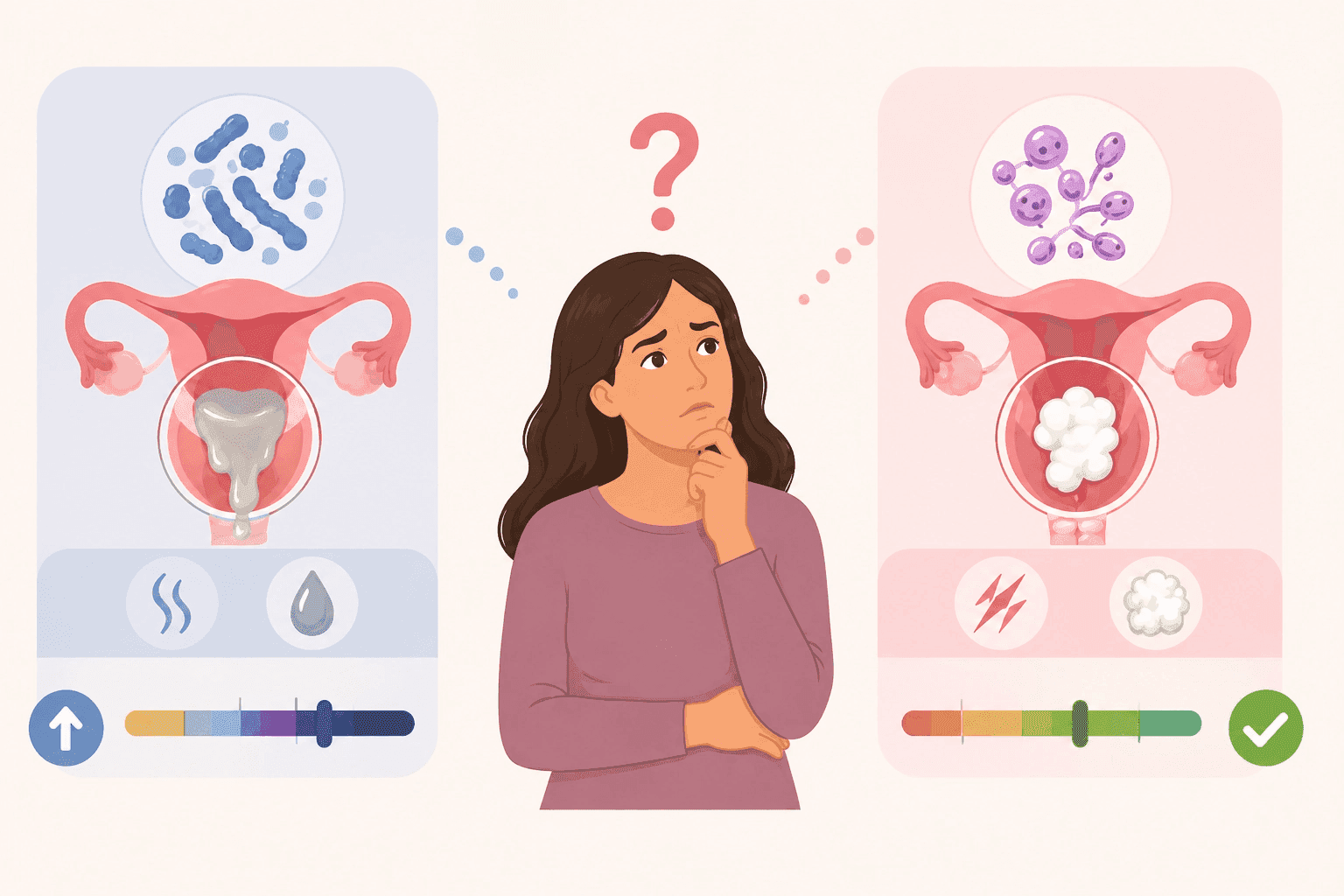
BV vs. Yeast Infection: why are they easy to confuse?
Bacterial vaginosis and vaginal yeast infections share several common symptoms, such as unusual discharge and discomfort, which is why they are often confused.
However, they are caused by different types of imbalances and require completely different treatments.
BV is caused by an overgrowth of bacteria, which typically causes a fishy odor and thin, watery, grayish discharge. A yeast infection is caused by an overgrowth of fungus (most commonly Candida albicans) and usually causes intense itching and thick, white discharge (similar to cottage cheese) with no noticeable odor.
Vaginal pH also behaves differently: it typically rises with BV, but usually stays normal with a yeast infection.
This is another reason why a multi-biomarker test is more helpful than a simple pH strip: it helps you better distinguish between these two conditions before seeing a doctor for a final diagnosis.
What should you do if your test shows a potential imbalance?
If a home test or pH strip suggests an imbalance, here are a few simple steps to guide you safely:
follow the instructions that came with your test kit carefully;
consult a healthcare provider if you have any questions or are experiencing symptoms;
avoid self-treating based on symptoms alone, as BV can easily be mistaken for other conditions;
always seek medical care if your symptoms are persistent or return frequently, if you are pregnant, or if you have any other underlying health concerns (such as a weakened immune system).
An at-home test is a helpful screening tool to guide you, but any treatment decisions should always be made by a healthcare professional.
FAQ
How do I know if I have bacterial vaginosis?
Common signs include thin, watery discharge that is white or grayish, along with an unusual, fishy odor.
Because BV can often have no symptoms at all, using a pH test, a multi-biomarker home test, or visiting a doctor are the most reliable ways to check.
Is there an at-home test for bacterial vaginosis?
Yes. You can buy simple vaginal pH tests as well as more comprehensive multi-biomarker home tests, like the one offered by Santelle, which analyze several vaginal indicators at once.
These tools are great for a quick check at home, but they do not replace a medical diagnosis from a healthcare provider.
Can a pH test detect BV?
A pH test can flag an imbalance if your pH is elevated, but it cannot confirm BV on its own because other factors (such as yeast infections, your period, or recent sex) can also change your pH.
A multi-biomarker test or a medical evaluation will give you a much more reliable answer.
What pH level indicates bacterial vaginosis?
A normal, healthy vaginal pH is typically between 3.8 and 4.5.
A pH higher than 4.5 is a common sign of BV, but this result needs to be looked at alongside other symptoms and tests to make an accurate diagnosis.
What happens during a vaginal swab test for BV?
A healthcare professional will gently collect a sample of vaginal fluid using a small cotton swab during a standard pelvic exam.
This sample can be evaluated immediately in the clinic using the Amsel criteria or sent to a lab for a Nugent score or molecular (PCR) testing.
Can a vaginal test tell the difference between a yeast infection and BV?
A test that looks at multiple indicators (like a multi-biomarker home test or a doctor's exam) is very helpful for telling them apart by checking pH and odor.
However, a medical evaluation—sometimes backed by a lab test—is the only way to know for sure which one you have.
Is a BV test reliable during my period or pregnancy?
Menstrual blood can temporarily raise your vaginal pH and interfere with test results, so it is best to avoid testing while on your period.
If you are pregnant, you should skip home testing and contact your doctor immediately if you notice any unusual symptoms, as untreated BV can lead to pregnancy complications.
How long does it take to get BV test results?
An at-home pH test or multi-biomarker test gives you results in just a few minutes.
A vaginal swab sent to a medical lab (for a Nugent score or PCR test) usually takes between one and a few days, depending on the lab.
Frequently asked questions
How do I know if I have bacterial vaginosis?
The telling signs are thinner discharge, white to greyish in colour, with an unusual odour often described as fishy. Because vaginosis can also be asymptomatic, a pH test, a multi-biomarker self-test or a medical consultation remain the most reliable ways to get your bearings or obtain a diagnosis.
Is there a self-test for bacterial vaginosis?
Yes. There are vaginal pH self-tests, as well as fuller multi-biomarker self-tests such as the one offered by Santelle, which analyses several vaginal markers in a single use. These devices help guide a first assessment at home, without replacing a medical diagnosis.
Can vaginosis be detected with a pH test?
A pH test can flag an imbalance where the pH is high, but it is not enough to confirm bacterial vaginosis, because other situations (an associated yeast infection, your period, recent sex) can also make pH vary. A multi-biomarker approach or medical advice gives a more reliable reading.
Which pH indicates bacterial vaginosis?
Normal vaginal pH is generally between 3.8 and 4.5. A pH above 4.5 is one of the signs that can point to bacterial vaginosis, but it must be read alongside other clinical or biological elements to make a diagnosis.
How is a vaginal swab for vaginosis taken?
The health professional takes a sample of vaginal secretions with a swab, during an ordinary gynaecological examination. That sample can then be analysed against the Amsel criteria during the consultation, or sent to a laboratory for a Nugent score or a molecular test (PCR, Gardnerella test).
Can a vaginal test tell a yeast infection from vaginosis?
A test combining several biomarkers, such as a multi-biomarker self-test or a full clinical examination, helps distinguish these two situations better, in particular through pH and odour. Only a medical diagnosis, possibly completed by a swab, can confirm with certainty which one it is.
Is a bacterial vaginosis test reliable during your period or pregnancy?
Your period can temporarily change vaginal pH and skew the reading of a pH test or self-test; it is better to test outside that time. During pregnancy, any sign suggesting vaginosis warrants prompt medical advice rather than a simple self-test, because of the risks associated with untreated vaginosis.
How long does it take to get the result of a bacterial vaginosis test?
A pH test or a multi-biomarker self-test at home gives a result within minutes. A vaginal swab analysed in a laboratory (Nugent score, PCR) generally takes from one to a few days depending on the laboratory and the method used.
Written by
Zineb Sadki
Editorial writing, Santelle
Zineb is a writer at Santelle and covers intimate health and the vaginal microbiome.