

Yeast and other Infections
Can a vaginal yeast infection go away on its own?

Yasmina Akni
SEO and press relations, Santelle
Can a thrush infection go away on its own?
It is possible, but rare. According to Santé.fr, a fungal infection sometimes clears up on its own, but without treatment or addressing its underlying cause, it can worsen or quickly return.
A vaginal yeast infection can be treated in a few days with an over-the-counter antifungal.
It itches, it burns, you have thick white discharge… and you wonder if it will go away by itself.
It is a very common reaction: you hesitate to go to the pharmacy or make an appointment, hoping it will settle down.
Here is what you need to know before deciding to wait.

How do you know if a yeast infection is going away?
A healing yeast infection improves gradually: the itching and burning subside, discharge returns to normal, and vulval swelling goes down.
If, on the contrary, symptoms remain the same after 3 or 4 days, or if they worsen (pain, swelling, small cracks in the skin), it will not clear up on its own and action is needed.
How long does a yeast infection last without treatment?
There is no set duration. An untreated yeast infection can linger for several weeks, with symptoms coming and going.
With appropriate treatment, however, things improve much faster:
Situation | Usual duration |
|---|---|
Vaginal thrush treated with a pessary and cream | Relief in 2 to 3 days, recovery in about a week |
Fungal infection in general, treated | 1 to 3 weeks, sometimes longer if the infection is severe. |
Untreated fungal infection | Several weeks, with a risk of worsening or quick recurrence |
These timeframes vary from person to person. If you have diabetes or a weakened immune system, recovery may take longer.
Can periods make a yeast infection go away?
Some women notice their symptoms change during their period.
Menstrual blood alters the acidity of the vagina, which can sometimes temporarily soothe symptoms, but periods do not “wash away” a yeast infection.
If it is still there afterwards, it needs to be treated.
Is it serious to leave a yeast infection untreated?
Vaginal thrush is generally not dangerous: it does not spread up to the uterus and does not cause infertility.
However, leaving it untreated carries real consequences:
Persistent symptoms: itching, burning, pain during sex, disrupted sleep.
Damaged skin: scratching causes cracks and lesions on the vulva, which can become infected.
Recurrences: without treatment or addressing its cause, thrush can return quickly. Having 4 or more episodes a year is considered recurrent thrush.
An undetected misdiagnosis: if it wasn't thrush, the actual infection (bacterial vaginosis, STI) will continue to develop.
Certain situations should never wait: if you are pregnant, diabetic, have a weakened immune system, or experience fever or abdominal pain, see a doctor promptly.
Is it really a yeast infection?
In an American study, researchers examined 95 women who had just purchased an over-the-counter thrush treatment at a pharmacy.
Only a third of them (34%) actually had a yeast infection alone.
The others had bacterial vaginosis, a mixed infection, trichomoniasis… or nothing at all.
And having had thrush diagnosed by a doctor in the past did not help them recognise it any better.
In other words, what you mistake for thrush that “won't go away” might be something else:
Bacterial vaginosis: greyish or yellowish discharge, fishy odour. It requires prescription treatment, not an antifungal.
Irritation or an allergy: soap, wipes, sanitary products.
An STI: trichomoniasis, chlamydia.
A vulval skin condition: eczema, lichen sclerosus.
How do you know if it's thrush?
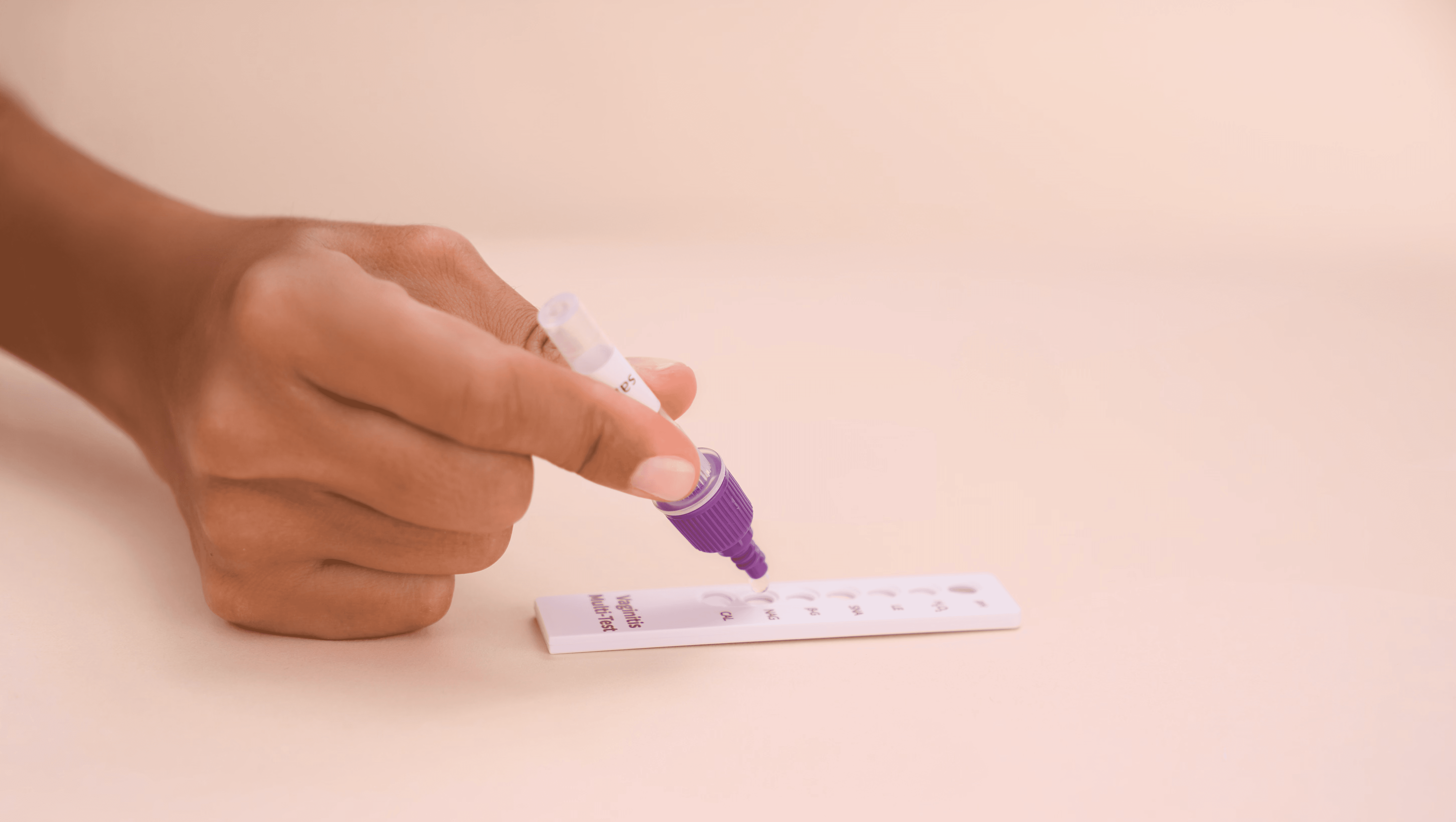
The Santelle vaginal test helps you find clarity from home: it analyses 6 biomarkers from a simple swab, with results in 10 minutes in the app.
You'll find out whether your symptoms are more consistent with thrush or bacterial vaginosis before deciding whether to wait, visit a pharmacy, or consult a doctor.
How do you treat thrush over the counter?
If you recognise a yeast infection that was previously diagnosed by a doctor, self-treatment is generally possible according to health guidance.
In pharmacies, without a prescription, you will find:
an antifungal pessary, to insert into the vagina at bedtime, often as a single dose;
an antifungal cream, to apply to the vulva for several days.
The two complement each other: the pessary treats the internal infection, while the cream relieves external itching. Your pharmacist can advise you.
Continue using the cream for the full recommended duration, even if your symptoms disappear earlier.
When should you see a doctor rather than self-treating?
Book an appointment rather than treating it alone if it is your first thrush infection, if you are pregnant or think you might be, if your discharge smells foul or is yellow, green or grey, or if you have a fever, abdominal pain or burning when urinating.
You should also consult a doctor if your symptoms do not improve a few days after treatment, or if thrush recurs several times a year: a swab will help identify the underlying cause.
Can you treat a yeast infection naturally?
Yoghurt, garlic, apple cider vinegar, coconut oil, essential oils… There are countless “natural” remedies on the internet, but none have been proven to cure a yeast infection.
Applied to an already irritated mucous membrane, some can even cause burning and inflammation, delaying proper treatment.
To relieve itching in the meantime, you can:
wash the vulva with warm water or a gentle, fragrance-free wash, and never douche;
pat dry gently;
wear cotton underwear and avoid tight clothing;
avoid sex until symptoms settle down.
These measures provide relief, but do not replace treatment if thrush is confirmed.
Frequently asked questions
Can a mild fungal infection clear up without treatment?
A mild thrush infection can sometimes clear up on its own if the vaginal flora regains its balance, but this is impossible to predict.
Over-the-counter treatment usually clears up the problem in a few days.
Can a vulval yeast infection go away on its own?
The same rules apply: it is possible, but rare. An antifungal cream applied to the vulva provides quick relief and prevents the skin from becoming damaged from scratching.
Can a fungal infection get worse if left untreated?
Yes. The itching may intensify, and the vulva can swell and crack. If it gets worse instead of better, do not wait.
Should you avoid having sex during a thrush infection?
It is advisable: friction further irritates the mucous membrane and can delay healing. Thrush is not an STI, but a partner may sometimes experience irritation.
Thrush and pregnancy: can you wait for it to go away?
No. During pregnancy, consult your doctor or midwife at the first signs of symptoms: certain treatments are contraindicated and the diagnosis must be confirmed.
Written by
Yasmina Akni
SEO and press relations, Santelle
Yasmina is an SEO specialist at Santelle, with a degree in biotechnology for health.