

Yeast infections
Antifungal pessary: how to use it and which duration to choose

Zineb Sadki
Editorial writing, Santelle
Vaginal yeast infections affect 75% of women at least once in their lives.
Faced with itching, burning or unusual discharge, the antifungal pessary remains the first-line local treatment.
But they do not all work the same way. Duration, active ingredient, use during your period or during pregnancy: here is what you really need to know to treat a vaginal yeast infection effectively.
What is an antifungal pessary?
An antifungal pessary is a medicine inserted directly into the vagina to treat a vaginal yeast infection, also called vaginal candidiasis.
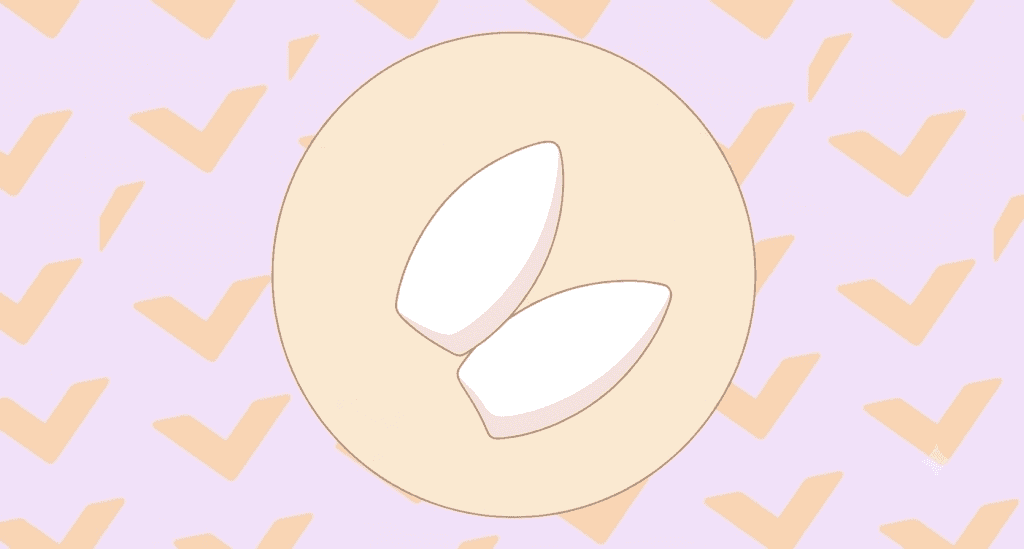
It comes as a small solid capsule that melts on contact with body heat and releases its active ingredient onto the infected area.
Its role is to destroy the fungi responsible for the infection, mainly Candida albicans, a fungus naturally present in the vagina but which can multiply excessively when the balance of the vaginal flora is disturbed.
The three most widely used active ingredients in antifungal pessaries sold in France are econazole, miconazole and clotrimazole. They all belong to the azole family and work by destroying the fungal membrane, which stops its growth.
This local action explains why symptoms, itching, burning, thick whitish vaginal discharge, generally improve within a few days.
Pessary, cream or vaginal tablet: what is the difference?
Several forms exist for treating a vaginal yeast infection locally. The choice often depends on where the symptoms are.
Form | Use | What it treats |
|---|---|---|
Antifungal pessary | Vaginal insertion | The inside of the vagina |
Antifungal cream | External or internal application | Irritation of the vulva |
Vaginal tablet | Vaginal insertion | The inside of the vagina |
When the itching also affects the vulva, doctors often recommend combining an antifungal pessary with an antifungal cream.
The pessary treats the infection inside, the cream relieves irritation outside for quick relief of the visible symptoms.
Antifungal pessary: with or without a prescription?
Some antifungal pessaries are available directly in pharmacies, without a prescription.
They are indicated for simple vaginal yeast infections, in women who have already had this type of vaginal infection and clearly recognise their symptoms.
Important: a vaginal yeast infection and bacterial vaginosis can cause similar symptoms, but they are not treated in the same way. Thin discharge with a strong odour, without real itching, points more towards bacterial vaginosis. In that case, an antifungal pessary will not be effective.
If in doubt, a medical consultation is needed before starting any treatment.
How to use an antifungal pessary correctly
In the evening before sleeping
Antifungal pessaries are always used in the evening, just before going to bed. Lying down, the antifungal medicine stays in prolonged contact with the vaginal mucous membrane instead of running out.
This directly improves the effectiveness of the treatment. Using a panty liner is advisable to avoid staining underwear.
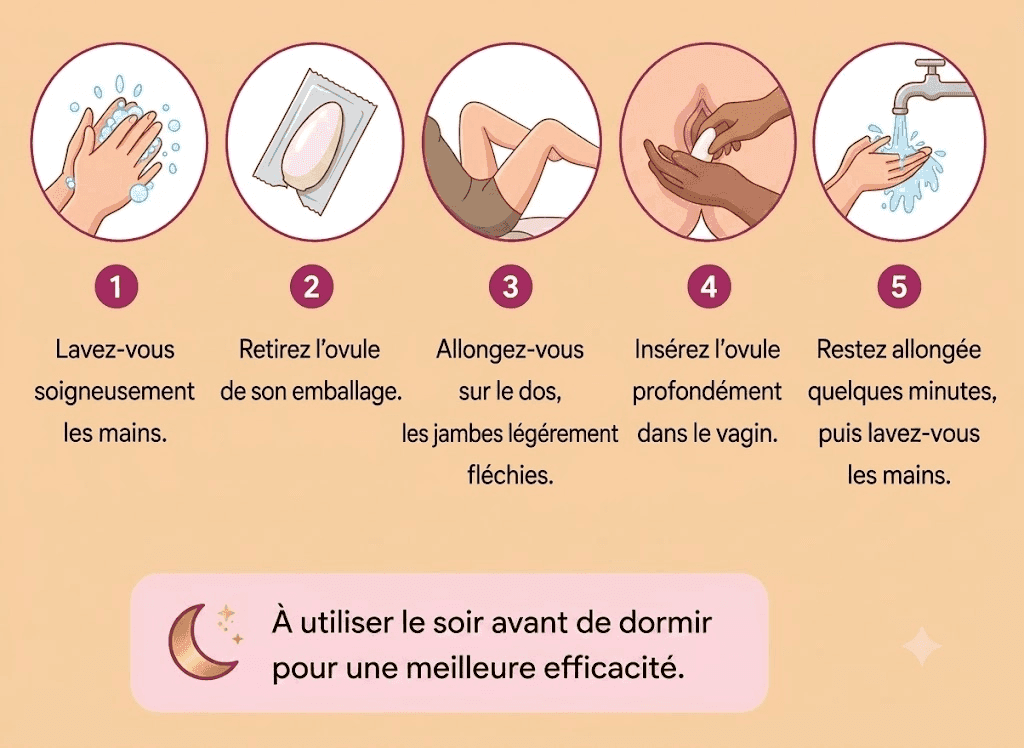
To use an antifungal pessary correctly:
Wash your hands thoroughly
Remove the pessary from its packaging
Lie on your back with your legs slightly bent
Insert the pessary deep into the vagina
Wash your hands after application
It is important to keep to the stated duration even if symptoms ease quickly.
Which treatment duration to choose: 1, 3 or 6 days?
The duration varies with the formulation and the severity of the infection.
A single-dose treatment suits a mild vaginal candidiasis, diagnosed early, in a woman who has not had several recently. It is the simplest option, but not always the most suitable.
A 3 to 6 day treatment is generally preferred for more intense symptoms, a recurrent yeast infection, or if a first short course was not enough.
Clinical studies show that 3 to 7 day treatments offer comparable cure rates to each other, but higher than single doses in moderate to severe forms.
In every case, you must finish the treatment even if symptoms disappear before the end. Stopping too early is one of the most common causes of recurring vaginal infections.
Can you use an antifungal pessary during your period?
No, this is generally advised against. Menstrual flow dilutes and flushes out the product more quickly, which reduces its effectiveness.
In most cases, it is better to wait until your period ends before starting treatment.
If the yeast infection occurs in the middle of your period and the symptoms are very troublesome, ask a doctor or pharmacist for advice before starting treatment.
Antifungal pessary during pregnancy
Hormonal variations during pregnancy change the balance of the vaginal flora, which increases the risk of a yeast infection.
Clotrimazole and miconazole are generally considered compatible with pregnancy, particularly in the second and third trimesters. Econazole, on the other hand, is less recommended in certain periods.
Using an antifungal pessary during pregnancy must always be approved by a health professional, even if the product is available without a prescription.
Yeast infections that keep coming back: why the pessary is no longer enough
We speak of a recurrent yeast infection when a woman has more than 4 episodes a year.
Around 5 to 8% of women are affected according to the available epidemiological data.
In these situations the pessary treats the symptoms of each episode, but does not resolve the underlying imbalance. The most common causes of recurrence are:
Vaginal flora depleted in Lactobacillus, the vagina's natural protective bacteria
Repeated courses of antibiotics, which reduce those same bacteria
A treatment stopped too early
Reinfection through sex in some cases
The vaginal flora plays a central role in protecting against infection. When it is disturbed, fungi such as Candida albicans find it easier to get the conditions they need to grow.
That is why doctors sometimes prescribe a maintenance treatment over several weeks, combined with Lactobacillus-based probiotics.
When recurrences are frequent despite several treatments, exploring the real state of the vaginal flora can help identify where the problem comes from.
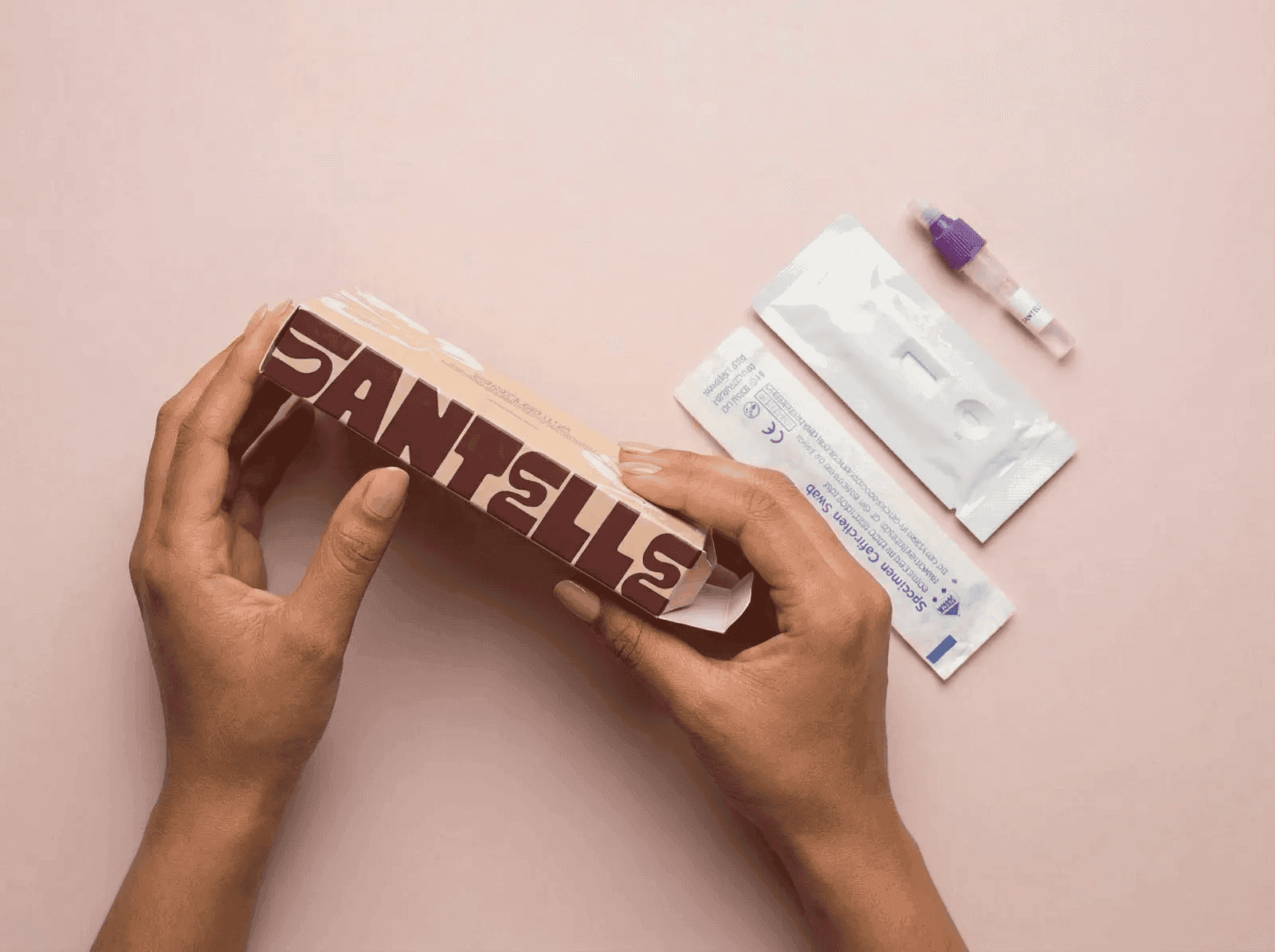
The Santelle vaginal test, for example, lets you test for the different types of vaginal imbalance, yeast infection, bacterial vaginosis, depleted flora, so care can be adapted rather than repeating the same treatments with no lasting result.
Frequently asked questions
How long does an antifungal pessary take to work?
The first improvements (less itching, reduced burning) often appear the day after the first application. Complete recovery generally takes 3 to 7 days depending on the length of the treatment chosen.
Can you have sex during treatment with an antifungal pessary?
It is better to avoid sex during treatment. The product can reduce the effectiveness of condoms (by weakening them), and sex can slow recovery by irritating the mucous membrane further.
Why does my yeast infection come back after treatment?
Recurrences are often linked to weakened vaginal flora, to antibiotics, to an incomplete course of treatment, or to another type of vaginal imbalance mistaken for a yeast infection. If this happens more than 3 times a year, a medical consultation and an assessment of the vaginal flora are recommended.
Can an antifungal pessary treat bacterial vaginosis?
No. Antifungal pessaries only work against fungi. Bacterial vaginosis is caused by a bacterial imbalance and is treated with specific antibiotics such as metronidazole.
Written by
Zineb Sadki
Editorial writing, Santelle
Zineb is a writer at Santelle and covers intimate health and the vaginal microbiome.