

Thrush and bacterial vaginosis
Vaginal thrush: can you go to the swimming pool?

Zineb Sadki
Editorial writing, Santelle
An afternoon at the swimming pool, and by evening, it's itchy. Or perhaps thrush is already there, your holidays are coming up, and you're wondering if you can still go swimming.
Good news: the swimming pool is not the enemy of your vaginal flora. You are not going to "catch" thrush in the water.
On the other hand, chlorine, a wet swimsuit, and damp heat can sustain discomfort or even promote an imbalance in women who are sensitive to it.
In this article, we take a look at what the pool really changes for vaginal thrush, help you distinguish thrush from simple chlorine irritation, and give you practical steps if you are prone to recurrences.

Can you go to the swimming pool with vaginal thrush?
In the vast majority of cases, yes.
Vaginal thrush is not a contraindication to swimming, and it is not transmitted to other swimmers through the water.
The real question is rather: will it do you any good? And there, it all depends on the intensity of your symptoms.
Mild symptoms (moderate itching, slightly altered discharge): you can swim, provided you rinse well and change your swimsuit when you get out.
Marked symptoms (burning, red and swollen vulva, small fissures): it is better to wait a few days. On damaged mucous membranes, chlorine stings and maintains inflammation.
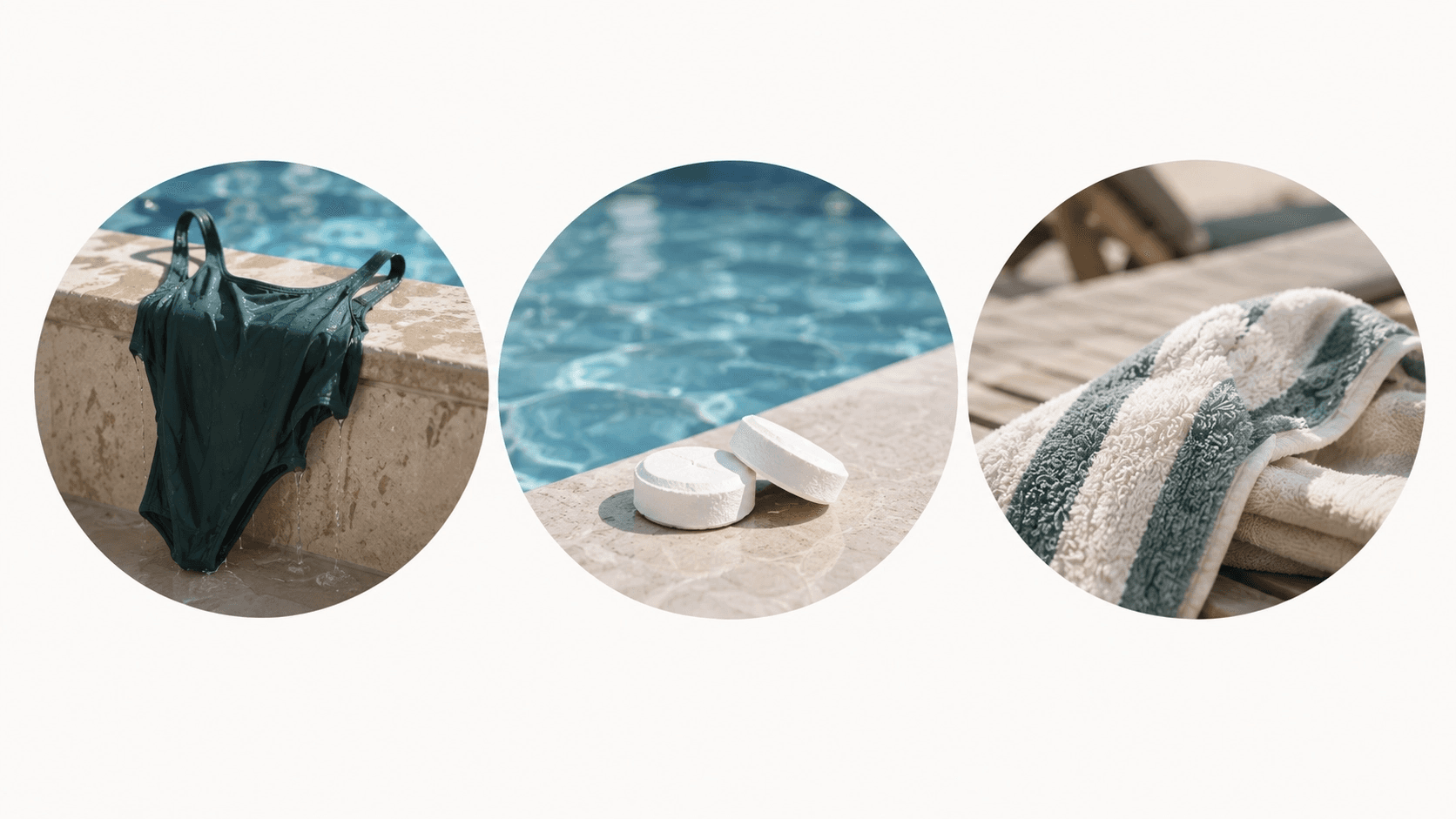
Can you go to the swimming pool during treatment for thrush?
Most local antifungal treatments are compatible with swimming, with a few adjustments:
Pessary: it is best inserted in the evening, at bedtime, lying down. Swimming during the day is therefore not a problem.
Antifungal cream: apply it after the shower following the pool, on clean and well-dried skin, otherwise it will wash off with the water.
Tampon: avoid using one during a local treatment, as it absorbs part of the product and can irritate an already sensitive mucous membrane.
If in doubt about your treatment, your pharmacist can tell you in two minutes if there are any special precautions to take.
Can you catch thrush at the swimming pool?
Not directly. Vaginal thrush is not an infection you catch from the outside: it is an overgrowth of a fungus already present in your flora.
Normally, the lactobacilli of the Döderlein flora keep it in check by maintaining an acidic vaginal pH. Thrush appears when this balance is disrupted.
The pool is therefore not a cause, but it can combine several contributing factors.
Why should you change your swimsuit after swimming?
This is by far the most important point. A wet swimsuit kept on for a long time creates a warm, damp, and poorly ventilated environment: exactly what Candida enjoys.
The skin macerates, the vulva becomes more fragile, and in a woman already prone to thrush, this can be enough to trigger another episode.
The problem is not the 30 minutes in the water, but the two hours spent afterwards on a sun lounger in a wet swimsuit.

Can chlorine worsen vaginal thrush?
Chlorine disinfects the pool water. But at pool concentrations, it does not cure an already established infection.
On the skin and mucous membranes, it primarily has a drying and irritating effect, which can worsen existing burning or itching.
Also note: pool water is adjusted around a pH of 7.2 to 7.6, much less acidic than the vaginal environment (around 3.8 to 4.5). During occasional swimming, the impact remains limited. But this is all the more reason to rinse off with clean water upon leaving.
Why can swimming cause intimate irritation?
An overly tight swimsuit, a towel rubbed vigorously, scented shower gel from the changing rooms, intimate wipes: each adds a small mechanical or chemical aggression.
Taken separately, nothing serious. Combined, they weaken the vulvar barrier.
Itching after the pool: is it thrush or irritation?
This is often where the doubt arises. And it's a good question, because the answer completely changes what you should do.
In practice: if the discomfort disappears within one or two days after removing the swimsuit, taking a shower, and wearing cotton, it was very probably irritation of the vulva.
If the itching intensifies or your discharge changes, an infection should be considered. And this is where you should avoid the classic mistake: taking an antifungal "just in case".
If the problem is actually bacterial vaginosis, the treatment will be ineffective and the imbalance can set in.
Good habits before and after swimming
What to do before going in the water?
Take a quick shower: this is mandatory in most pools, and it limits direct contact of chlorine with skin already covered in sweat or products.
Wear a clean and perfectly dry swimsuit. A swimsuit left damp in your bag since the last session is not a good idea.
Avoid panty liners and scented products on the day of swimming.
What to do after swimming?
Remove your wet swimsuit as quickly as possible. This is the step that matters most.
Rinse yourself with clean water. No need for intimate soap every time: water is enough to remove chlorine residue.
Pat yourself dry, without rubbing, and take the time to dry the folds thoroughly.
Put on cotton underwear and loose clothing rather than tight synthetic leggings.
No douching, ever: it washes away the protective flora and actually promotes infections.
Caring for your swimsuit
Rinse it after each swim, wash it regularly according to its care label, and let it dry completely in the open air.
If you swim several times a day, pack a second swimsuit rather than putting the same damp one back on.
How to avoid intimate irritation when going to the pool often?
For an occasional Sunday swim, the steps above are more than enough.
For swimmers who train several times a week, it's different: the pool itself isn't the problem, the repetition is.
The closer the sessions, the less time the skin and flora have to recover between exposures to chlorine and moisture. A few adjustments make all the difference:
Alternate between two swimsuits, so they truly dry between two training sessions.
A complete change of clothes in your bag (cotton knickers, dry clothes) so you never go home in a wet swimsuit.
Particular attention on double-session days, training camps, or competitions, where you sometimes spend hours in a swimsuit by the pool.
An unperfumed emollient care product on the vulva if chlorine dries it out, for external use only.
Take the first signs seriously: it is better to react to an unusual discomfort straight away rather than waiting until the end of the season.
And if you experience thrush at least four times a year, this is referred to as recurrent thrush: it warrants a consultation to find the cause, beyond just the swimming pool.
None of this should keep you away from the pool: swimming remains an excellent sport. It is simply a matter of adapting your routine to your actual practice.
What should I do if I have itching after the pool?
Eliminate irritation factors for 24 to 48 hours: no swimming, wear cotton, no scented products.
Observe how it develops. If everything returns to normal, it was probably an irritation.
If symptoms persist, identify the source before treating. Thrush, vaginosis, and irritation look similar, and each is treated differently.
Ask your pharmacist for advice. In the UK, treatments for vaginal thrush rely on antifungals of the azole family, as a pessary or cream, and sometimes orally.
With appropriate treatment, improvement occurs within a few days. If there is no improvement after 3 days, consult a doctor.
Conclusion
The swimming pool does not cause vaginal thrush, and thrush does not necessarily stop you from swimming.
What matters is what happens around the swim: the wet swimsuit kept on for too long, the chlorine not rinsed off, the cumulative friction.
Itching after the pool is most often a simple irritation that passes in a day or two.
If it persists or if your discharge changes, take the time to identify what is happening before treating. Listening to your body without downplaying or overreacting is still the best approach.
Frequently asked questions
Can you go swimming with a vaginal thrush infection?
Yes, most of the time. Only avoid swimming if your vulva is raw, cracked, or very painful, as chlorine will make the burning worse. Remember to rinse off and change your swimsuit when you get out.
Can you go swimming with a vaginal suppository?
Yes. The vaginal suppository is generally inserted in the evening at bedtime, so swimming during the day is not a problem. For a cream, apply it after showering following your swim.
Does swimming pool chlorine kill fungal infections?
No. Chlorine disinfects the pool water, but it does not treat an active vaginal thrush infection. However, it can dry out and irritate the mucous membrane.
Why do I get itchy after the swimming pool?
Most often, this is irritation related to chlorine, friction, or a wet swimsuit. It disappears within 24 to 48 hours. If the itching intensifies or is accompanied by unusual discharge, consider a yeast infection or vaginosis.
How long should you wait after a yeast infection to go back to the swimming pool?
There is no mandatory waiting period. You can resume as soon as the burning sensation and itching have significantly decreased, often after a few days of treatment.
Can you go in a jacuzzi with a yeast infection?
It is best to avoid it. The hot water and the time spent in the bath promote maceration much more than a classic swimming pool.
Written by
Zineb Sadki
Editorial writing, Santelle
Zineb is a writer at Santelle and covers intimate health and the vaginal microbiome.