

Flora and microbiome
Döderlein flora: role, symptoms and natural solutions

Roxanne Sabbag
Co-founder and biomedical engineer, Santelle
Have you heard about Döderlein flora after a smear test, or has your doctor mentioned an imbalance in your vaginal flora? This slightly technical name actually describes something very concrete: the protective bacteria that live naturally in your vagina and look after your intimate health every day.
When that balance is disturbed, the body sends signals: unusual discharge, odours, discomfort, which deserve to be understood, not ignored.
In this article we explain what this flora really is, why it is essential, and how to preserve or restore it.
What is Döderlein flora?
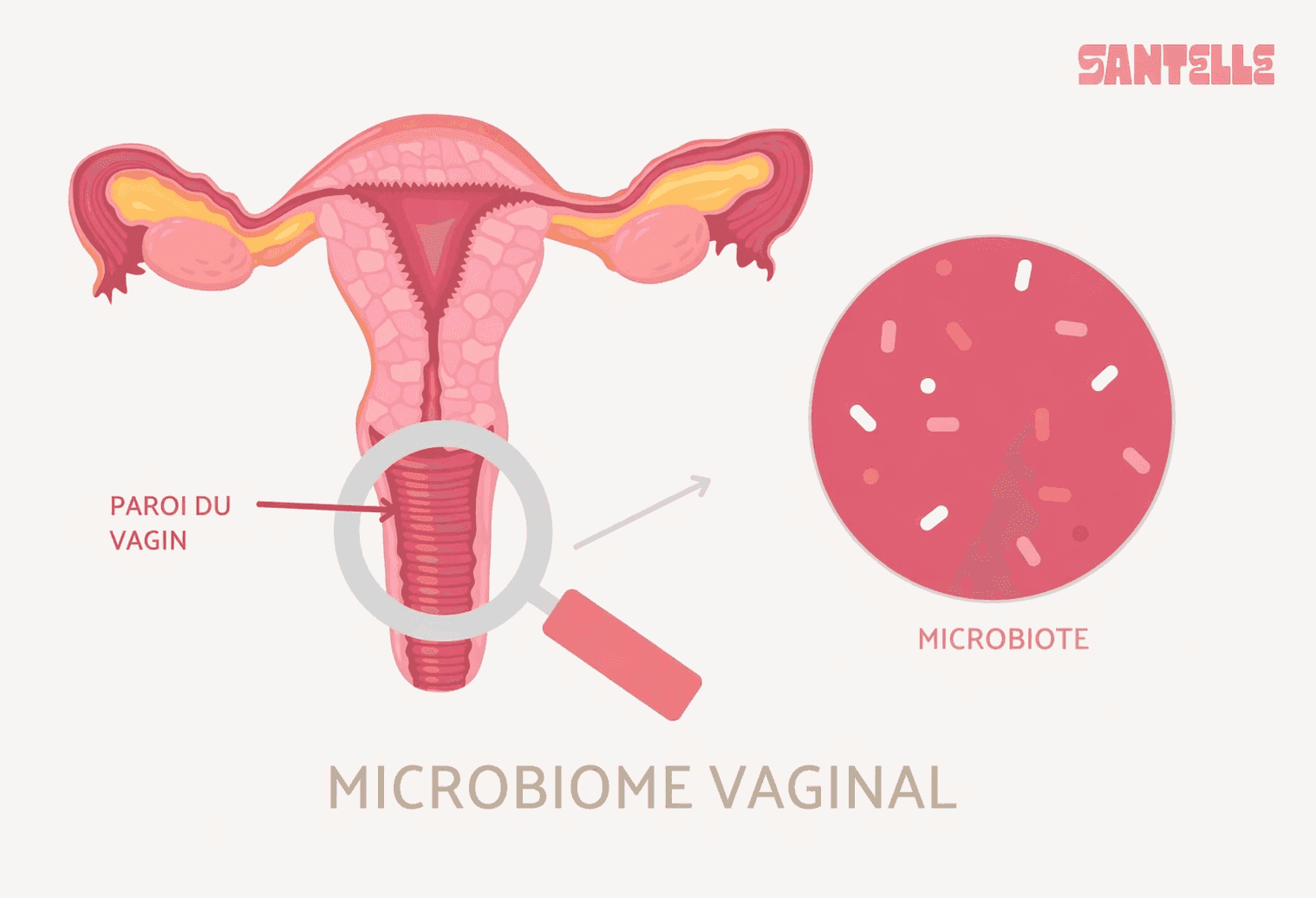
Döderlein flora is the set of micro-organisms that naturally populate the vagina.
It is part of what we now call the vaginal microbiome, a living ecosystem, unique to each woman, that changes throughout life.
Döderlein flora is made up mainly of lactobacilli, naturally beneficial bacteria also found in yoghurt or sauerkraut.
In the vagina their role is specific: they ferment the glycogen present in vaginal cells to produce lactic acid.
The result: the vagina maintains an acidic pH, generally between 3.8 and 4.5.
And it is precisely this acidity that creates a hostile environment for pathogenic bacteria, fungi and certain viruses.

Why this flora is essential to vaginal balance
Balanced flora acts as natural protection.
When lactobacilli are present in sufficient numbers, they occupy the space, acidify the environment and secrete antimicrobial substances that stop pathogens from proliferating.
Conversely, as soon as this flora weakens, because of antibiotics, a hormonal change or certain hygiene products, other micro-organisms can take over.
That is what can lead to bacterial vaginosis, a yeast infection, or persistent discomfort with no apparent cause.
This imbalance is not inevitable. But to prevent or fix it, you first need to understand how this intimate ecosystem works.
Symptoms of unbalanced Döderlein flora
When Döderlein flora is disturbed, the body lets you know.
The signs are not always dramatic. Sometimes it is just a slightly different odour, a feeling of discomfort or discharge that changes colour or texture.
These signals deserve attention, even if they do not necessarily mean there is a serious infection.
The most common signs to recognise
Here is what you may feel or notice when your vaginal microbiome is unbalanced:
Vaginal discharge that changes: it can become heavier, thinner, greyish or yellowish, or have a different texture than usual. This change is often the first visible sign.
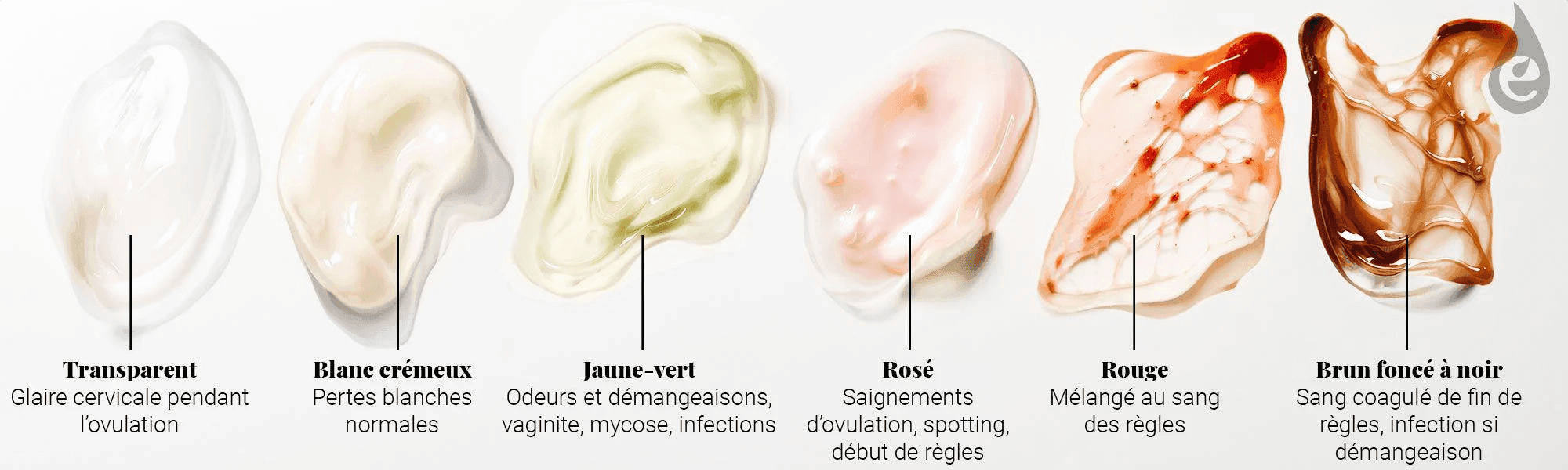
An unusual odour: a strong odour, sometimes described as fishy, is characteristic of bacterial vaginosis. It can get stronger after sex or during your period.
Itching or burning: a feeling of irritation at the vaginal opening or during sex can indicate that the balance is disturbed. Take care not to confuse it with a yeast infection, which often causes thick white discharge.
Vaginal dryness: less well known, it can also signal a weakening of the protective flora, particularly around menopause.
The key point: these symptoms often resemble each other, and it is not always easy to work out on your own what is going on.
If the signs last more than a few days or keep coming back, a consultation is needed.
Abundant or absent flora: is that normal?
Yes, in most cases. The vaginal microbiome is not fixed, it changes naturally throughout life, across the menstrual cycle and with hormonal changes.
What matters is understanding what these variations mean.
When the flora is absent or greatly reduced
This can happen after a course of antibiotics. These medicines do not distinguish between the bad bacteria they target and the good bacteria of your vaginal flora.
The result: everything is somewhat flattened. Intense fatigue, a hormonal change (pregnancy, menopause, the pill) or hygiene products that are too harsh can also weaken the flora.
The body is often able to rebalance on its own, but sometimes it needs a helping hand, and that is where probiotics or a suitable treatment come in.
When the flora is too abundant: cytolysis
This is the less well-known case, but it exists. When lactobacilli proliferate excessively, they make the vagina too acidic. This is called cytolytic vaginosis.
The symptoms look a lot like those of a yeast infection: whitish discharge, itching, a burning feeling.
This often causes confusion, and pushes some women to use antifungals that do not help, and may even make the situation worse.
The good news: it is not dangerous. It is your good bacteria being a little too eager.
But it confirms that a precise diagnosis is always more useful than self-treatment.
How do you restore Döderlein flora?
The good news is that the vaginal flora has a real capacity to rebalance itself.
In many cases a few adjustments are enough. In others, medical treatment is needed. Here is how to approach it in order.
Vaginal probiotics
This is often the first thing recommended, and for good reason.
Probiotics contain live lactobacilli strains that reinforce those already present in the vagina.
Not all strains are equal. The most studied for vaginal health are Lactobacillus crispatus, Lactobacillus rhamnosus and Lactobacillus reuteri.
When you are looking for a probiotic to rebalance your flora, check that these names appear on the label.
They come in two forms:
Orally (capsules to swallow): practical day to day, they work by passing through the gut before reaching the genital area
Vaginally (pessaries or capsules inserted directly): they act more locally and more quickly

The two can be combined. If you are unsure what suits you, your doctor or midwife can point you in the right direction.
Diet
Diet influences your gut microbiome, and the two are linked. A healthy gut indirectly supports vaginal balance.
A few simple habits that make a difference:
Favour fermented foods such as plain yoghurt, kefir, sauerkraut or kimchi, they naturally provide lactobacilli. Fibre (vegetables, pulses, wholegrains) feeds the good bacteria already present.
Limit refined sugar and ultra-processed foods, which encourage the growth of Candida albicans, the fungus responsible for yeast infections.
This is no miracle diet, but these habits create favourable ground for a balanced microbiome over the long term.
Suitable intimate hygiene
This is perhaps the most underestimated point. Many vaginal flora imbalances are caused, unintentionally, by over-zealous hygiene habits.
What you need to know: the vagina cleans itself.
Vaginal discharge is there for precisely that.
Trying to eliminate every odour or discharge with perfumed products or douches means disturbing the natural protective mechanism.
What to do:
Clean only the vulva (the outside), with lukewarm water or a soap-free intimate gel at neutral or slightly acidic pH
Avoid douching, it removes the protective lactobacilli
Choose cotton underwear, which lets the skin breathe
Change your sanitary pad regularly during your period
What you do not use matters as much as what you do.
When to seek advice and consider medical treatment
If symptoms last more than a few days, come back often or are accompanied by pain, do not sit with it alone.
A simple vaginal swab tells you exactly what is going on, yeast infection, vaginosis, cytolysis or something else, so treatment can be adapted accordingly.
Depending on the diagnosis, your doctor may suggest:
Antifungals (cream or pessary) for a yeast infection
Local or oral antibiotics for bacterial vaginosis
Simple monitoring and probiotics for cytolysis
One important point: if you tend to self-treat with antifungals bought at the pharmacy at every hint of vaginal discomfort, know that this reflex can make things worse if the cause is not a yeast infection.
Diagnosis first, treatment second.
Conclusion
Döderlein flora is your silent ally. It works continuously, without you thinking about it, to maintain your intimate balance and protect you from infection.
An imbalance can happen to anyone, after antibiotics, a hormonal change, a period of stress.
It is neither negligence nor inevitability. It is the body sending a signal, and that signal deserves to be heard.
The good news is that in most cases this balance can be restored. Sometimes on its own, sometimes with a little help: suitable probiotics, gentler hygiene, a diet that supports your microbiome.
And when symptoms persist, a consultation makes the right diagnosis possible and avoids treating the wrong thing.
Getting to know your vaginal flora better means learning to tell the difference between what is normal and what deserves attention, without worrying unnecessarily, but without ignoring what your body is trying to tell you either.
Frequently asked questions
My test result says “abundant Döderlein flora”, is that good news?
This is one of the most common questions after a vaginal swab, and the answer often comes as a surprise. Intuitively, abundant sounds like healthy. Not always. Flora that is too abundant can signal an imbalance, often linked to stress or a diet too high in sugar. The result: the vagina becomes too acidic, causing burning or tingling that many women mistake for a yeast infection. What you are looking for is not the maximum quantity, it is balance. Neither too much nor too little. If your result leaves you puzzled, do not sit alone with your lab sheet. Your doctor or midwife is there to explain it.
My result says “Döderlein flora absent”, what should I do?
Absent flora means the protective lactobacilli are insufficient or have disappeared. The most common causes are a recent course of antibiotics, menopause without local treatment, or a period of intense fatigue and stress. Without these good bacteria, the vagina is less well protected and more vulnerable to infection. But the body has a real capacity to rebalance, especially with a little help: suitable probiotics, gentle hygiene and, if necessary, a treatment prescribed by your doctor. If the absence persists or comes with troublesome symptoms such as significant dryness or unusual discharge, seek advice without delay.
What are Döderlein bacilli on a smear test?
Döderlein bacilli is the name given to lactobacilli, your good protective bacteria, when they are observed under the microscope during a smear test or vaginal swab. The most common strains are Lactobacillus crispatus, Lactobacillus gasseri and Lactobacillus iners. Their presence in normal quantities is a sign that your vaginal microbiome is working well.
Does Döderlein flora change during pregnancy or menopause?
Yes, and that is normal. Your vaginal microbiome naturally changes with your hormones. During pregnancy the flora becomes more abundant, the body reinforcing its protection. But this period also makes the microbiome more sensitive, which is why yeast infections and vaginosis are more common in pregnant women. After menopause, falling oestrogen gradually depletes the flora. This can cause vaginal dryness and greater vulnerability to infection. Probiotics, moisturising pessaries or prescribed local oestrogen can help. In both cases this is not an anomaly, it is an adaptation that can be supported.
Written by
Roxanne Sabbag
Co-founder and biomedical engineer, Santelle
Roxanne co-founded Santelle and is a biomedical engineer specialising in vaginal health.