
Symptoms
Labia minora hypertrophy: causes, symptoms and solutions

Yasmina Akni
SEO and press relations, Santelle
Female anatomy is extraordinarily diverse. There is no single "normal" vulva, and yet many women grow up never hearing it said.
A major study carried out at Lillebaelt Hospital (Denmark) on 244 women found that 56% of women have "visible" labia minora.
The result? Years of discomfort, self-consciousness or physical unease lived through in silence, for something that concerns the majority of women.
In this article we will look, without taboo and without judgement, at:
What is labia minora hypertrophy?
The difference between aesthetic and functional discomfort
The main causes of labial hypertrophy
The symptoms of hypertrophy
How to reduce the labia minora without surgery
What is labiaplasty?
What is labia minora hypertrophy?
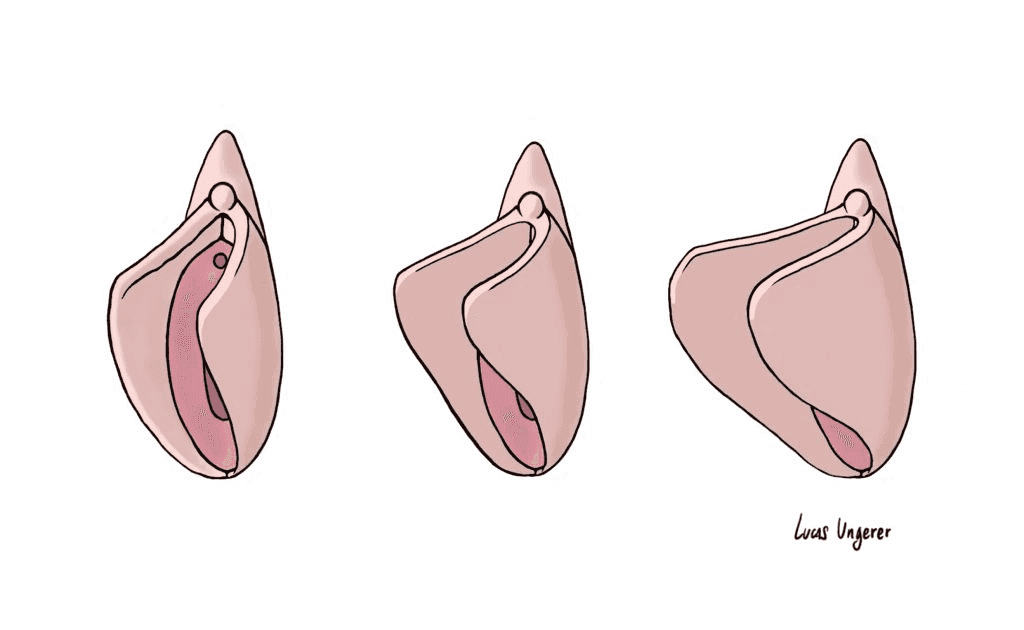
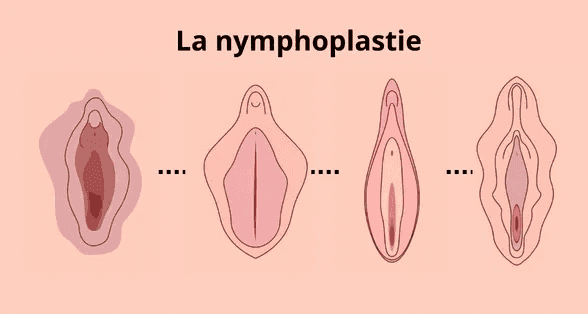
The labia minora (or nymphae) are two folds of skin and mucous membrane located either side of the vaginal opening, inside the labia majora.
Their role is both protective, shielding the urinary meatus and the vaginal opening, and sensory, as they are richly innervated.
We speak of labia minora hypertrophy when they extend beyond the labia majora by more than 2 cm (according to the Felicio classification, the one most used in medicine).
But this measurement is only indicative: it is above all the discomfort you feel, physical or psychological, that determines whether treatment is needed.
Note: Longer labia minora are not a sign of disease. It is a normal anatomical variation, like the size of your ears or the shape of your nose.
The difference between aesthetic and functional discomfort
This is where it all comes down to. Labia minora hypertrophy can be experienced in two very different ways:
Aesthetic discomfort: self-consciousness about the appearance of the vulva, an impact on self-confidence, avoiding intimacy
Functional discomfort: pain during sport, chronic irritation, discomfort during sex, difficulties with intimate hygiene
Both types of discomfort are equally valid and legitimate. But the solutions are not always the same.
The main causes of labial hypertrophy
Labia minora hypertrophy can have several origins. In most cases, several factors combine.
Genetics and puberty
This is the most common cause. From puberty onwards, under the effect of oestrogen, the tissues of the vulva develop.
In some women the labia minora grow more markedly than in others, simply because that is their natural, genetically inherited anatomy.
This form of hypertrophy is present from adolescence and stays stable over time. It is not associated with any condition.
Hormonal changes (pregnancy, menopause)
Hormonal fluctuations can change the volume and texture of the vulval mucous membranes at different points in life:
During pregnancy: increased blood flow and hormonal changes can cause temporary swelling of the labia minora, which can sometimes persist after birth.
At menopause: the fall in oestrogen changes all the genital tissues. Paradoxically, some women see a change in labial volume, combined with dryness of the mucous membranes that makes the discomfort worse.
During the menstrual cycle: slight variations in volume are normal, linked to monthly hormonal fluctuations.
Medicines and chronic inflammation
Less well known, these causes nevertheless deserve a mention:
Some hormonal treatments (the pill, HRT, testosterone) can influence the volume of vulval tissue.
Chronic irritation caused by unsuitable hygiene products, recurring infections (yeast infections, vaginosis) or repeated friction can lead to a gradual thickening of the mucous membranes.
Vulval skin conditions such as lichen sclerosus can, in some cases, change the appearance and volume of the labia minora.
Note: If the hypertrophy appeared suddenly or comes with pain, itching or unusual discharge, see a health professional.
The symptoms: when hypertrophy becomes a real problem
Labia minora hypertrophy does not always cause symptoms. But when it does, they can have a significant impact on everyday quality of life.
Physical discomfort day to day
During sport: cycling, running, horse riding or yoga can cause painful friction. Repeated pressure on the labia minora creates irritation that can put women off exercising.
With clothing: tight underwear, jeans or sportswear can cause chronic irritation through friction. Some women avoid certain outfits for this reason.
When sitting for long periods: working seated all day can become uncomfortable when the labia minora are permanently compressed.
Discomfort during sex
Penetration can be painful when the labia minora fold inwards.
This situation, involving the introitus, can create repeated micro-trauma and a growing apprehension about sex.
Psychological impact and self-esteem
It would be reductive to play down the emotional dimension. Many women report:
Avoiding intimacy out of shame or fear of how they will be seen
A difficult relationship with their body, sometimes since adolescence
A feeling of being abnormal for lack of accessible information
These feelings are real and deserve to be addressed just as much as the physical symptoms.
Reducing the labia minora without surgery
Good news: in many cases, non-surgical solutions significantly improve everyday comfort.
Adapting your intimate hygiene
The choice of hygiene products is fundamental. A soap that is too harsh or too perfumed can worsen irritation of vulval mucous membranes already under strain from friction.
A few recommendations:
Use a gentle wash at physiological pH (between 4.5 and 5.5), specially formulated for the intimate area
Avoid perfumed wipes and intimate deodorants
Rinse with clean water after sport
Choosing suitable underwear
Choose non-synthetic cotton, which breathes and reduces friction
Opt for seam-free cuts around the crotch
For sport: wear shorts or cycling shorts with a built-in lining to reduce friction
Using soothing, protective care
Soothing balms or oils based on natural ingredients (calendula, aloe vera, jojoba oil) can create a protective film on irritated mucous membranes and reduce local inflammation.
Psychological and sexological support
When the discomfort is mainly emotional or relational, a consultation with a sexologist or a psychologist specialising in sexual health can be transformative.
These professionals help women make peace with their bodies, without judgement and without necessarily going through surgery.
Pelvic floor rehabilitation: an often forgotten approach
Less well known in this context, pelvic floor rehabilitation can nevertheless play a valuable complementary role.
This applies when the hypertrophy comes with muscular tension in the pelvic floor, common in women who anticipate pain and contract involuntarily.
Working with a midwife or a specialist physiotherapist releases this tension, improves comfort during sex and reduces local sensitivity.
In practice, most women see a noticeable improvement in symptoms within 4 to 8 weeks by combining adapted hygiene, local care and suitable underwear.
For deeper discomfort, physical or emotional, support from a midwife, a sexologist or a psychologist can lastingly transform quality of life, without ever having to step through the door of an operating theatre.
Labiaplasty: what to know before deciding
Labiaplasty (or nymphoplasty) is the surgical procedure that reduces and/or reshapes the labia minora. It is one of the most widely performed cosmetic gynaecological procedures in the world.
But it should never be a decision taken lightly.
When is it indicated?
Labiaplasty is considered when:
The functional discomfort is severe and chronic despite conservative measures
The pain significantly affects quality of life (sport, sex, daily life)
The patient has had time to reach her decision, after medical and psychological support
It is generally not recommended before the age of 18, because the tissues are still developing.
How the operation works
The procedure is carried out as day surgery (with no hospital stay), under local or general anaesthetic depending on the case. It lasts between 45 minutes and an hour and a half.
The surgeon removes the excess tissue while preserving sensitivity as far as possible. Several techniques exist:
Linear resection: the most common, a clean result and a discreet scar
Wedge resection: preserves more of the nerve endings
Laser technique: less bleeding, slightly faster recovery
Labiaplasty before and after: what to expect?
Results are generally very satisfactory. More than 90% of patients report that functional pain disappears and that their quality of life and self-esteem improve significantly after the procedure.
However, labiaplasty does not "cure" deep psychological distress. That is why psychological support before the operation is strongly recommended.
Recovery generally involves:
Time off work: 5 to 10 days for a desk job
Returning to sport: 4 to 6 weeks
Resuming sex: 6 to 8 weeks
Final result visible: 3 to 6 months
How much does labiaplasty cost? Is it reimbursed?
In France, the cost of a labiaplasty varies between €1,500 and €3,500 depending on the surgeon, the facility and the technique used.
The procedure is covered only on medical justification of proven functional discomfort (chronic pain, documented impact on quality of life).
A prior agreement request to the health insurance fund is then required. Outside that framework, it remains 100% at your own expense.
Labia minora hypertrophy: the key points
Labia minora hypertrophy is common, normal in origin, and treatable.
It is not a disease. It is not an abnormality. And it does not automatically call for surgery.
What matters is your comfort, physical and emotional. And for that, solutions exist at every stage: from adapting your intimate hygiene to surgery if needed, by way of psychological support.
Do not sit alone with this discomfort. You deserve to be heard.
Written by
Yasmina Akni
SEO and press relations, Santelle
Yasmina is an SEO specialist at Santelle, with a degree in biotechnology for health.